Heart rhythm and AFib care
Heart doctors at Ascension St. Vincent in Indiana deliver specialized heart care for AFib and other heart arrhythmias.
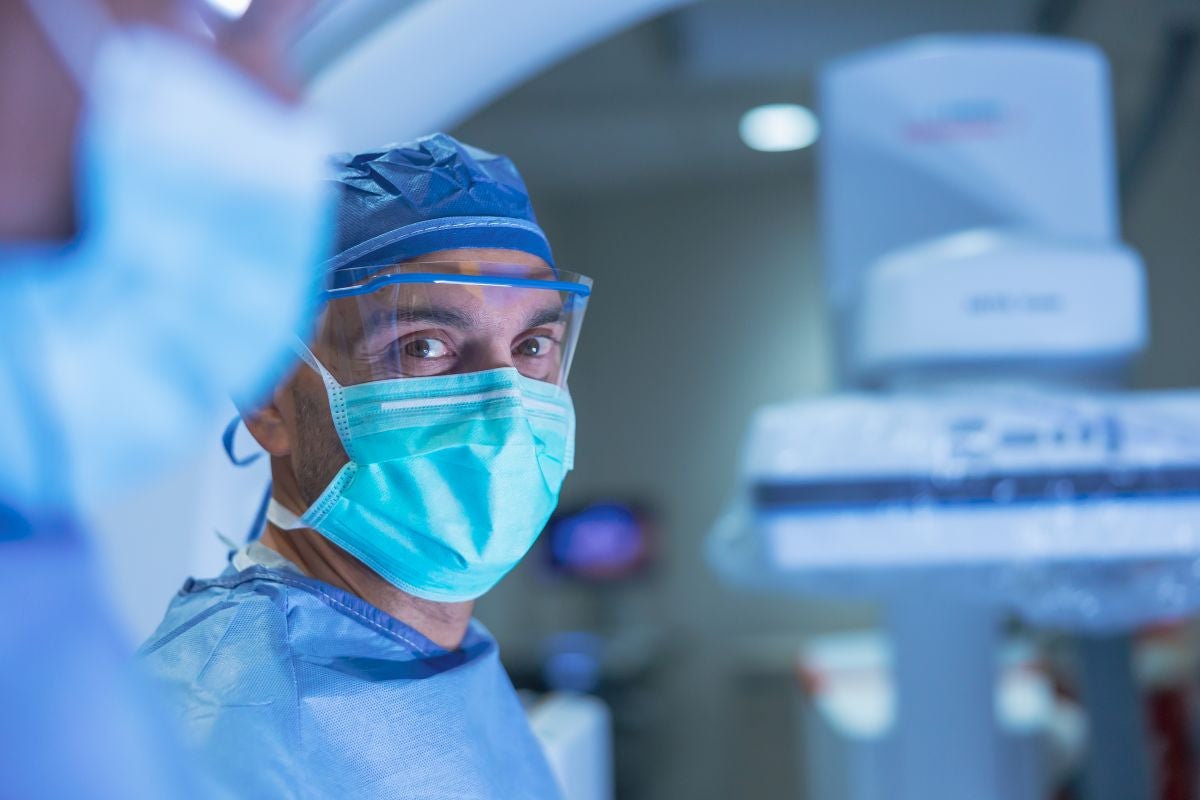
Heart rhythm and AFib care in Indiana
Heart doctors at Ascension St. Vincent in Indiana deliver specialized heart care for AFib and other heart arrhythmias.
Why choose us
When you choose Ascension St. Vincent for your heart care, your doctor is part of a nationally recognized program with over 150 cardiologists and cardiac surgeons known for providing excellence in heart disease prevention, diagnosis, treatment and recovery.
Understand your heart arrhythmia
Cardiologists specialize in arrhythmias, such as atrial fibrillation (AFib), a type of arrhythmia where your heart beat is irregular, either too fast or too slow. It is a heart rhythm disorder that can be a sign of a more serious condition. Other symptoms of AFib may include chest pain, sweating, fatigue, shortness of breath, and weakness. AFib may come and go and affect how your heart pumps blood through your body, increasing your risk for stroke and congestive heart failure.
Symptoms of AFib and other heart arrhythmias
Common symptoms heart arrhythmias include:
- Anxiety or feeling uneasy
- Chest discomfort or pain
- Dizziness or lightheadedness
- Fatigue or feeling unusually tired
- Fainting
- Fluttering feeling in the chest
- Irregular or rapid heartbeat
- Shortness of breath
- Skipping or pounding heartbeat
- Weakness or difficulty exercising
How we diagnose AFib
Your doctor may recommend a series of tests as part of your care plan. EKGs, stress tests and blood tests are used to help detect an irregular heartbeat. You and your doctor will work together to choose a treatment option that is right for you.
Your cardiologist may order blood work to diagnose and manage a heart condition. Your doctor may also recommend heart blood work if you're at risk for heart disease, have a family history or are managing a condition like high blood pressure or high cholesterol.
A chest X-ray is a quick, noninvasive imaging test that provides a detailed picture of the inside of your chest, helping your care team detect signs of a heart condition.
Your heart specialist uses echocardiograms, also known as heart ultrasounds, to create detailed images of your heart. This noninvasive test uses sound waves to show how your heart is beating and how well it's pumping blood. During the test, a transducer is placed on your chest. It sends out sound waves that bounce off your heart and create real-time images on a screen.
This test records the electrical activity of the heart, shows abnormal rhythms (arrhythmias), and can sometimes detect heart muscle damage.
We offer electrocardiograms (EKGs or ECGs) to help quickly evaluate how your heart is working. This simple test records the electrical activity of your heart. It can help detect a variety of heart conditions, such as arrhythmias.
The test uses small patches called electrodes that are placed on your chest, arms and legs to record your heart's electrical activity. You'll lie still while the machine creates a tracing of your heartbeat for your doctor to review.
Our electrophysiology (EP) team performs advanced EP studies to diagnose the source and type of arrhythmias accurately. Using specialized catheters and real-time mapping, we evaluate your heart's electrical activity to guide the best treatment plan for your heart condition.
Our heart care teams use heart monitoring to help detect and evaluate irregular heart rhythms that may not appear during an office visit. These simple tests record your heart’s activity while you go about your daily routine, giving your cardiologist a better understanding of your heart health.
Heart monitors are small, wearable devices that record your heart’s electrical activity over a period of time to identify irregular heart rhythms (arrhythmias). This diagnostic tool helps guide treatment decisions, and monitor how well your current heart care plan is working.
Your cardiologist may recommend a loop recorder implantation to help diagnose irregular heart rhythms that may be difficult to detect with standard monitoring. This small device is placed just under the skin to record your heart's activity over time continuously. If the monitoring shows that you have a heart condition, your doctor will work with you to create a treatment plan that is right for you.
A cardiac stress test measures how your heart responds to exercise or medication that mimics exercise. As your heart works harder, we monitor your heart rate, blood pressure and electrical activity to look for signs of reduced blood flow or other abnormalities. This test helps detect signs of heart disease and determine the cause of arrhythmia to help your heart team create a personalized treatment plan.
Your heart specialist uses echocardiograms, also known as heart ultrasounds, to create detailed images of your heart. Transesophageal echocardiography (TEE), is a common echocardiogram used to detect AFib. TEE uses a thin, flexible probe gently inserted into the esophagus to see your heart’s upper chambers and check for blood clots, which are a common concern with AFib. The esophagus sits close to the heart, this approach gives much clearer and more detailed images than a standard echocardiogram.
How we treat AFib and other heart arrhythmias
Treatment for AFib and other heart arrhythmias may include medication, therapy or surgery.
Atrial fibrillation ablation is a minimally invasive procedure that uses heat or cold energy to create small scars in the heart tissue, blocking abnormal electrical signals that cause an irregular heartbeat. This treatment can help restore a normal rhythm, improve symptoms such as palpitations and fatigue, and reduce the risk of AFib returning.
Ablation can also treat other abnormal heart rhythms, such as supraventricular tachycardia (SVT), pre-ventricular contractions (PVCs) or atrial flutter. The procedure blocks bad electrical signals, helping the heart beat normally and reducing symptoms like rapid heartbeat, dizziness, or shortness of breath, and sometimes reducing the need for long-term medication.
This treatment uses a special pacemaker to help the heart's lower chamber beat in a more coordinated way. The technology sends small electrical signals to both sides of the heart, causing them to pump together, thereby improving blood flow and reducing symptoms such as fatigue, shortness of breath, and swelling. The pacemaker is placed below the collarbone, underneath the skin, with three wires that go to the heart to help correct your heart rate.
Your cardiologist may use cardioversion, also known as defibrillation, when your heartbeat needs to be restored to a normal rhythm. The procedure uses electric shocks to stop irregular heartbeats. Cardioversion can be used as a treatment for AFib or in emergency cases when you or your loved one is experiencing cardiac arrest.
Left atrial appendage (LAA) closure procedures help reduce stroke risk in patients with non-valvular AFib who are unable to take long-term blood thinners. Using minimally invasive procedures such as the WATCHMAN™ device, heart specialists close off the LAA to prevent blood clots from entering the bloodstream and causing a stroke.
This surgical procedure is used to treat AFib, helping to restore your heart rhythm. Heart surgeons use a maze pattern technique to create incisions in the heart's upper chambers to block abnormal electrical signals. The maze procedure, also known as the Cox-Maze procedure, uses cold and hot energy to create a scarring effect that corrects the heart signals that cause arrhythmia.
Your cardiologist might recommend a pacemaker if you have irregular heartbeats, a slow heart rate or are experiencing heart block. A pacemaker helps keep your heart regulated by sending electric signals to your heart if it senses trouble. The device is implanted under the skin and helps improve symptoms such as fatigue, dizziness and fainting.
We offer radiofrequency or catheter ablation to treat certain types of arrhythmias, including AFib and supraventricular tachycardia (SVT). During this minimally invasive procedure, a catheter is guided through a blood vessel to the heart, where targeted heat energy is used to interrupt abnormal electrical signals and restore a normal heart rhythm.
Clinical trials
Our doctors are committed to being leaders in cardiovascular research, working to help improve how we diagnose and treat heart and vascular diseases. You can talk to your cardiologist if you are interested in participating in clinical trials.
Get a second opinion from a heart specialist
Decisions about your heart care are important. Getting a second opinion not only provides more information about your condition, but it can help you feel more confident in the doctor and the care plan you choose. Consider getting a second opinion if:
- Your diagnosis or prognosis is unclear
- You’ve been told you have a rare or life-threatening condition
- You would like to explore other treatment options
- Your treatment options are costly or risky
- You want to hear an opinion from another specialist
- Your insurance requires a second opinion
How to get care
To make an appointment, a referral should be made by your primary care doctor or another specialist. Once the referral is received and reviewed, you will be contacted to schedule an appointment with a cardiologist.
If you are experiencing a life-threatening emergency, go directly to the ER or call 911.
All registered marks are property of their respective owners. All rights reserved.