Helping the next generation of healthcare workers
February 4, 2026
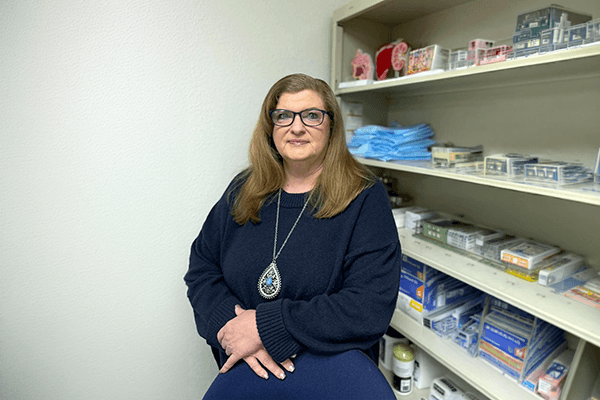
Ascension St. John workforce development manager felt called to come back to the place where she started her career to help the Tulsa community explore careers in healthcare.
Cardiologists at Ascension St. John in Oklahoma deliver advanced care for coronary artery disease (CAD).

Cardiologists at Ascension St. John in Oklahoma deliver advanced care for coronary artery disease (CAD).
When you choose Ascension St. John for your heart care, your doctor is part of a program with 21 cardiologists and cardiac surgeons known for providing personalized care for heart disease prevention, diagnosis, treatment and recovery. Our heart program offers advanced screenings and diagnostics from a team who cares for more hearts than any other health system in Oklahoma.
Clogged arteries, also known as coronary artery disease (CAD), is the most common type of heart disease in the United States. CAD happens when plaque, including fats and cholesterol, build up on your artery walls. Plaque buildup, called atherosclerosis, can slow or completely block blood flow to your heart. This can lead to more serious heart conditions, such as heart attack. Cardiologists at Ascension St. John deliver advanced care for the prevention, diagnosis and treatment of CAD.
Common symptoms of CAD include:
Getting the care you need starts with understanding your health. Specialists at Ascension St. John use a variety of diagnostic tests to diagnose CAD.
This test is a CT scan that measures the amount of calcium in the walls of your coronary arteries. Buildup of calcium, or calcifications, are signs of atherosclerosis or coronary heart disease.
Your doctor may recommend this test if you have a condition that involves the blood vessels. CT angiography is a type of medical test that combines a CT scan with an injection of a special dye. This is to make pictures of blood vessels and tissues in a part of your body. The dye is injected through an IV (intravenous) line started in your arm or hand. A CT scan is a type of X-ray that uses a computer to make images of your body. The dye injected to do CT angiography is called a contrast material. This is because it highlights the blood vessels and tissues being studied.
It's used to check the heart's function and structures. During the procedure, a transducer (like a microphone) sends out sound waves at a frequency too high to be heard. When the transducer is placed on the chest at certain locations and angles, the sound waves move through the skin and other body tissues to the heart tissues. The waves bounce or "echo" off the heart structures. These sound waves are sent to a computer that can create moving images on the screen of the heart walls and valves.
This is also called a treadmill or exercise ECG. This test is done to monitor the heart while you walk on a treadmill or pedal a stationary bike. Your doctor also monitors your breathing and blood pressure. A stress test may be used to detect coronary artery disease, or to determine safe levels of exercise after a heart attack or heart surgery. This test can also be done using special medicines that stress the heart in a similar manner as exercise does. Sometimes a stress test will collect ECG information along with heart ultrasound pictures. This is called an exercise or stress echocardiogram (echo). It's more sensitive and specific than ECG stress testing alone.
Schedule a heart scan today to find out about your heart health.
Treatment for CAD may include:
Angioplasty and stenting is a procedure to improve the blood flow in an artery or vein. The carotid artery is a large artery running along each side of your neck. During the procedure, a thin flexible tube (catheter) is put into an artery in your groin. It's gently threaded up into the problem area in the carotid artery. The catheter has a tiny, deflated balloon at the tip. When it reaches the narrowed part of your carotid, the balloon is inflated. This opens up the narrowed area. This is called angioplasty.
A tiny mesh tube (stent) may be put into this area. It's left in place to help keep the artery open.
Your cardiologist might suggest CABG to treat blocked or narrowed coronary arteries. CABG is a surgical technique used to restore healthy blood flow to the heart, improve heart function and reduce symptoms. Our experienced cardiac surgeons perform both on-pump CABG and off-pump CABG. The procedure is chosen based on the severity of the blockage in the coronary arteries.
Your doctor may recommend lifestyle changes to slow the progression of CAD and help relieve symptoms. Lifestyle changes may include stopping the use of tobacco products, exercise and having a healthier diet.
Your cardiologist may recommend medications to help manage your heart condition. Mediation may be used to lower blood pressure, prevent blood clots, lower cholesterol and more.
This procedure encompasses several types of procedures that are designed to improve blood flow through the coronary arteries, including:
Our doctors are committed to being leaders in cardiovascular research, working to help improve how we diagnose and treat heart and vascular diseases. You can talk to your cardiologist if you are interested in participating in clinical trials.
COSIRA-II
Efficacy of the coronary sinus reducer in patients with refractory angina II
LIBREXIA-ACS
A study of milvexian in participants after a recent acute coronary syndrome
TECTONIC
Tectonic CAD IVL IDE Study
TRANSFORM
A randomized comparison of stage-based care versus risk factor-based care for prevention of cardiovascular events
If you are at risk for CAD or have been diagnosed, talk with one of our specialists. Every appointment starts with a conversation about how you are feeling, any new symptoms or concerns. Your care team will take the time to answer all your questions — big and small.
It's easy to get a second opinion at Ascension St. John. We can review your medical records and healthcare history to answer your questions and discuss options for heart surgery.
When you are facing a new diagnosis or are deciding on a surgical treatment plan, there’s a lot to think about. If you are looking for a second opinion for advanced heart care, our cardiologists can also connect you with the right specialists for minimally invasive surgery, including transcatheter aortic valve replacement (TAVR). Our heart and vascular specialists can provide a second opinion, based on our experience and as part of a national care team.
Before your appointment, check with your insurance company to find out if a second opinion is covered. We can request your medical records on your behalf, so that they can be shared with your care team before your arrival.
If you are experiencing a life-threatening emergency, go directly to the ER or call 911.
All registered marks are property of their respective owners. All rights reserved.