An Ascension Wisconsin nurse’s story of preventing breast cancer through early detection
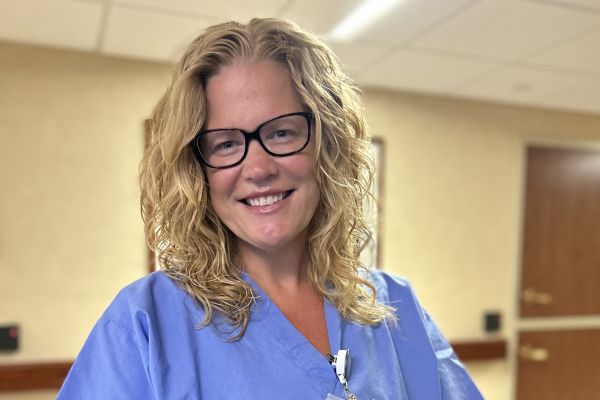
Angela, a nurse at Ascension St. Elizabeth Hospital, is proof of how early detection and routine screenings can catch breast changes early and prevent cancer.
When Angela de Moraes, a longtime labor and delivery nurse at Ascension St. Elizabeth Hospital, went in for her first routine mammogram at age 40, she had no idea that regular screenings would soon become a lifeline for her health. With little family history of breast cancer, Angie never considered herself high-risk. But she made a commitment to start screening on schedule, a choice she now knows may have prevented cancer.
Unexpected findings caught early
Angie’s first two mammograms were normal. But in February 2023, her third screening showed something different: small lumps in her left breast. A biopsy revealed papillomas and a fibroadenoma, anomalies that doctors wanted to keep an eye on. “I couldn’t feel anything on my own,” Angie said. “If I hadn’t gone in, I wouldn’t have known anything was wrong.” While the findings weren’t cancerous, they motivated Angie to remain diligent about regular screenings.
A year later, another mammogram showed something new: a lump on her right breast that hadn’t been there before. This time, the biopsy revealed atypical hyperplasia, a precancerous condition. “That one could have turned into cancer if I hadn’t caught it early,” Angie explained. “It really drove home how important it was that I started screenings when I did.” She underwent surgery to remove the lump and was again recommended to continue her screening regimen.
Treatment and monitoring at Ascension St. Elizabeth Hospital
Over the next year, Angie underwent another surgery and multiple procedures at Ascension St. Elizabeth’s cancer center to remove additional growths in both breasts. Thankfully, every follow-up biopsy came back negative for malignancy. The experience led her to join the high-risk breast program within the Ascension Wisconsin Cancer Prevention and Wellness Program, which oversees her annual mammograms and MRIs.
Through it all, Angie leaned on the support of her care team. “Nurses tend not to make great patients,” she said with a chuckle, “but my team checked in on me constantly, even outside of appointments. I never felt like I was going through it alone.”
The importance of breast cancer prevention
Riann Collar, oncology PA-C at the Ascension Wisconsin high-risk breast program, says Angie’s experience highlights what she wishes more people understood about cancer risk and prevention. “Routine screenings are critical for detecting cancer early,” Riann said. “No one wants cancer, and we hope for negative results, but if we do have it, the goal is to find it as early as possible when treatment, outcomes and survival are more favorable.” She also stressed that screening is not one-size-fits-all. “Knowing your personal risk is important so we can screen appropriately, sometimes that means earlier screenings or using additional tools.”
And while Angie didn’t consider herself high-risk at first, Riann noted that risk does not stay the same over time. “Our breast cancer risk is not the same throughout our life,” she explained. “It changes based on personal or family health history, which is why it’s so important to keep talking to your healthcare provider about those changes.”
Angie’s message to other women
As both a nurse and a patient, Angie hopes her story encourages other women to be proactive about breast cancer prevention. “I’d rather know than not know,” she noted. “Screenings gave me the chance to take care of things before they became cancerous.” Now, Angie is focused on staying healthy for her family, including her husband and four children. Her advice to other women is simple but powerful: put your health first. “Take the time to get your screenings done,” she urged. “Do it for yourself and for the people who love you. Prevention really does make all the difference.”
To learn more about preventing breast cancer with Ascension Wisconsin, click here.
Click here to schedule your mammogram.
Last updated: septiembre 30, 2025