Women’s cardiology
Cardiologists at Ascension St. Vincent deliver specialized heart care to help manage heart disease in women.
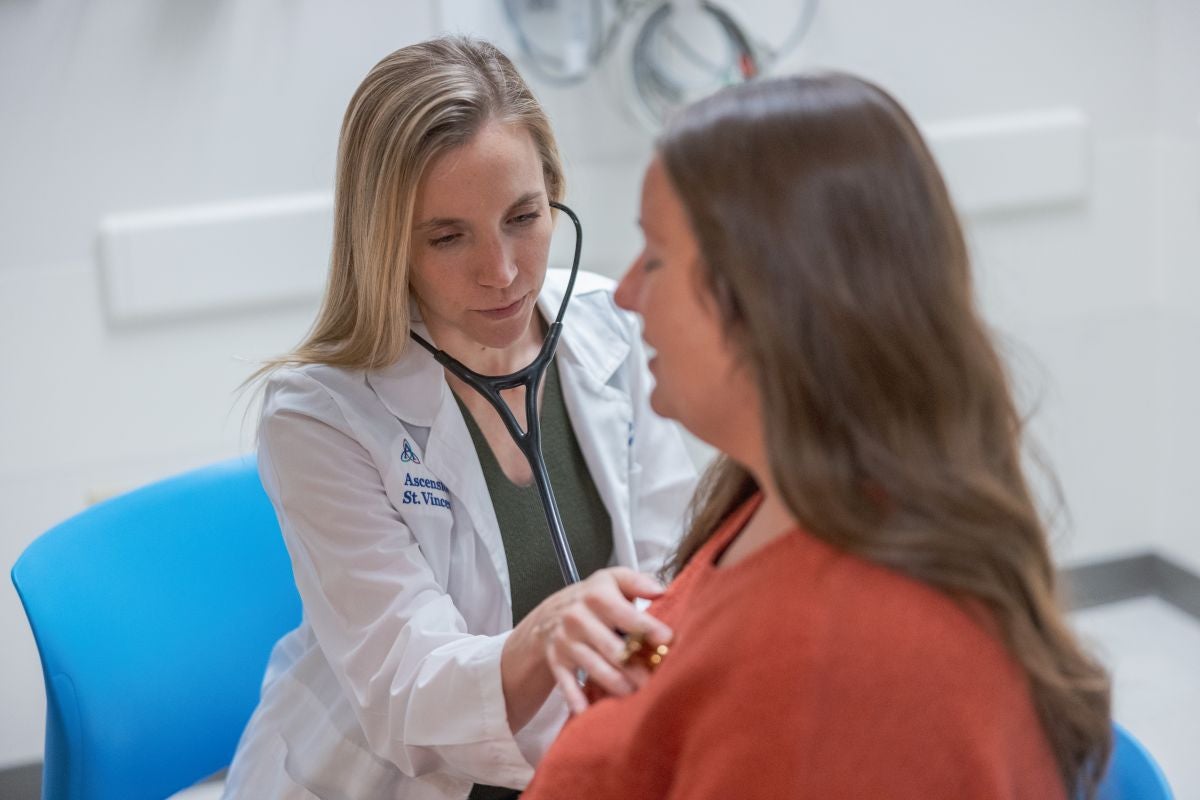
Heart care for women in Indiana
Cardiologists at Ascension St. Vincent deliver specialized heart care to help manage heart disease in women.
Why choose us
Cardiologists at Ascension St. Vincent in Indiana specialize in providing heart care for women. We diagnose, treat and monitor heart conditions that commonly affect women, such as heart disease, heart attack and chronic chest pain. And when you choose Ascension St. Vincent for your heart care, your doctor is part of a national heart care team of specialists sharing best practices, research and the latest in cardiovascular therapeutics and treatments.
Symptoms of heart disease in women
Some women may not have any symptoms, while others may experience:
- Chest pain
- Nausea
- Vomiting
- Fatigue
Heart disease risk factors for women
Common risk factors for heart disease in women include:
- Diabetes
- Family history of heart attack and stroke
- Inactivity
- Menopause
- Mental stress and depression
- Pregnancy complications, such as preeclampsia
- Smoking
How we manage heart risk factors
Since heart disease is the leading cause of death for women, we focus on heart care prevention. Your doctor will create a care plan that helps manage your risk factors. This may include lifestyle changes, medications, and lowering high blood pressure and high cholesterol.
Your care team provides blood pressure monitoring to help you better understand your heart health and reduce the risk of severe conditions like heart attack, stroke and kidney disease. Whether you're being screened for high blood pressure (hypertension) or managing an existing condition, regular monitoring can keep you healthy. Your heart specialist may recommend doctor visit checks, home blood pressure monitoring or 24-hour blood pressure monitoring.
A blood test is a lab analysis of things that may be found in your blood. You may have blood tests to keep track of how well you are managing a condition, such as diabetes or high cholesterol. You may also have them for routine checkups or when you are ill.
This is also known as a cardiac or heart cath. For this test, your doctor guides a small catheter (hollow tube) through the large artery in your upper leg, or sometimes your wrist or arm, into your heart. This procedure lets your doctor take a close look at the heart to identify concerns and to perform other tests or procedures.
A simple lipid blood test can give your cardiologist important information about your cholesterol levels to personalize your care plan to prevent heart attack, stroke and other heart conditions. A cholesterol test, also called a lipid panel, measures the levels of different types of fats in your blood, including total cholesterol, LDL cholesterol, HDL cholesterol and triglycerides.
This test records the electrical activity of the heart, shows abnormal rhythms (arrhythmias), and can sometimes detect heart muscle damage.
For this test, catheters are placed through the large vein in the upper leg and threaded into the heart. It's used to test the heart's electrical system. It helps your doctor look at what might be causing abnormal heart rhythms.
This is also called a treadmill test or exercise ECG. This test is done to monitor the heart while you walk on a treadmill or pedal a stationary bike. Your doctor also monitors your breathing and blood pressure. A stress test may be used to detect coronary artery disease, or to determine safe levels of exercise after a heart attack or heart surgery. This test can also be done using special medicines that stress the heart in a similar manner as exercise does. Sometimes a stress test will collect ECG information along with heart ultrasound pictures. This is called an exercise or stress echocardiogram (echo). It's more sensitive and specific than ECG stress testing alone.
How we prevent and treat heart disease in women
Our preventive cardiology programs focus on identifying and managing risk factors before heart problems develop. We deliver personalized care plans that include heart-healthy lifestyle guidance, advanced screenings and support. Our goal is to help you stay ahead of heart disease.
If you have been diagnosed with heart disease, we are here to support you. Your doctor works with you to create a personalized care plan. Heart disease may be managed with lifestyle changes, medication or a heart procedure.
Get a second opinion from a heart specialist
Decisions about your heart care are important. Getting a second opinion not only provides more information about your condition, but it can help you feel more confident in the doctor and the care plan you choose. Consider getting a second opinion if:
- Your diagnosis or prognosis is unclear
- You’ve been told you have a rare or life-threatening condition
- You would like to explore other treatment options
- Your treatment options are costly or risky
- You want to hear an opinion from another specialist
- Your insurance requires a second opinion
How to get care
To make an appointment, a referral should be made by your primary care doctor or another specialist. Once the referral is received and reviewed, you will be contacted to schedule an appointment with a cardiologist.
If you are experiencing a life-threatening emergency, go directly to the ER or call 911.
All registered marks are property of their respective owners. All rights reserved.