Helping the next generation of healthcare workers
February 4, 2026
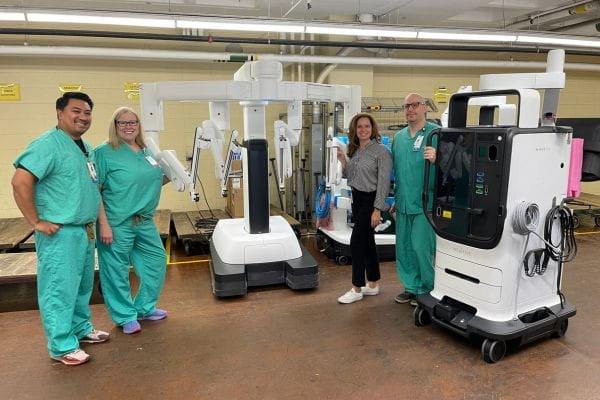
Ascension St. John workforce development manager felt called to come back to the place where she started her career to help the Tulsa community explore careers in healthcare.
Our OB-GYN team in Oklahoma uses advanced diagnostic tools to understand your symptoms and identify women’s health conditions, helping create a care plan that’s right for you.
A blood test is a lab analysis of things that may be found in your blood. You may have blood tests to keep track of how well you are managing a condition, such as diabetes or high cholesterol. You may also have them for routine checkups or when you are ill.
A cervical biopsy is a procedure to remove tissue from the cervix to test for abnormal or precancerous conditions, or cervical cancer.
During an endometrial biopsy, your healthcare provider removes a small tissue sample from the lining of the uterus (endometrium) for study. The tissue is viewed with a microscope to look for abnormal cells. Your doctor can also check the effects of hormones on the endometrium.
A fetal ultrasound is a test used during pregnancy. It creates an image of your baby in your womb (uterus). These tests are a safe way to check your baby’s health. During a fetal ultrasound, your baby’s heart, head and spine are evaluated, along with other areas. The ultrasound may be performed either on the abdomen (transabdominal) or inside the vagina (transvaginal).
A pelvic ultrasound is a scan that looks at the organs and structures in your pelvic area. It allows your healthcare provider to look at your uterus, cervix, bladder, fallopian tubes and ovaries. A pelvic ultrasound may be done in two ways:
Transabdominal: A transducer and gel are put on your belly.
Transvaginal: A long, thin transducer is covered with a plastic or latex sheath and gel, then placed inside the vagina.