Why choose Ascension St. John for women's heart care?
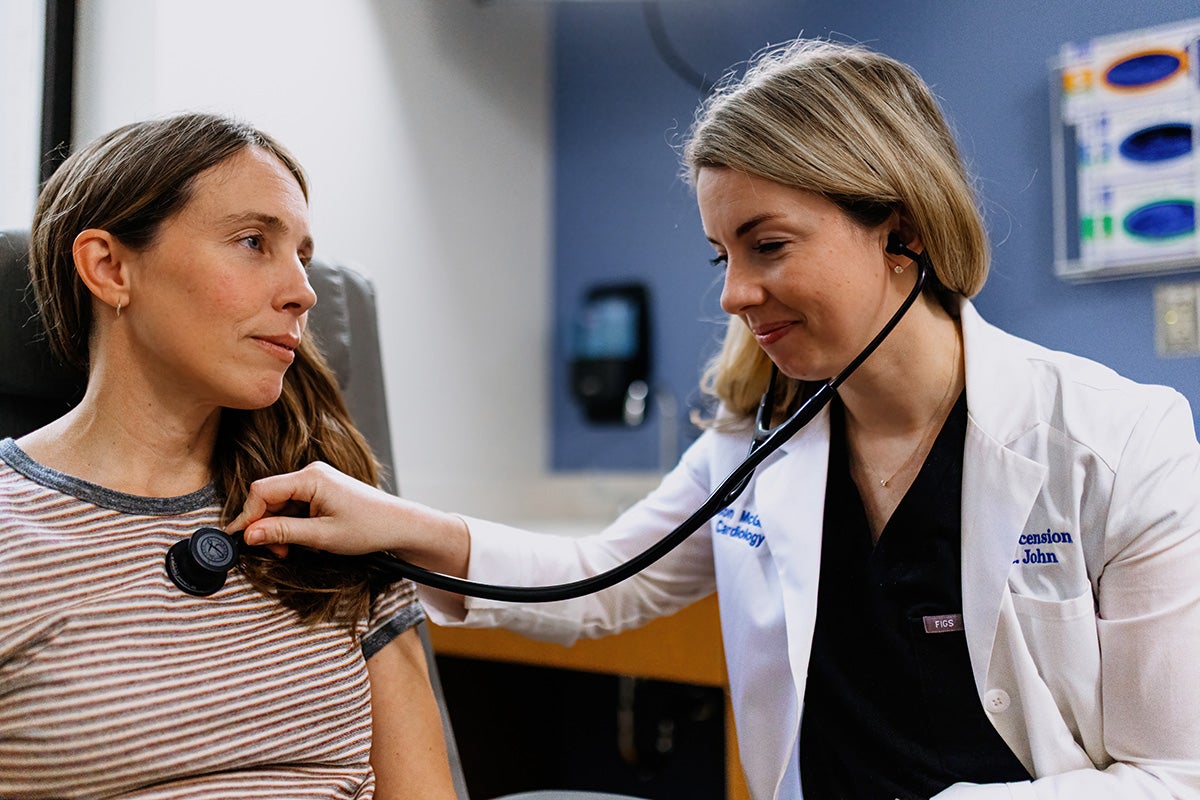
Cardiologists at Ascension St. John in Oklahoma specialize in providing heart care for women. We diagnose, treat and monitor heart conditions that commonly affect women, such as heart disease, heart attack and chronic chest pain. Your care team works with specialists across Ascension's national cardiovascular network, sharing leading practices and the latest treatment options to support your care.
Know the signs of heart disease in women.
Heart disease symptoms are not always the same for every woman. Some women have no symptoms, while others may notice:
- Chest pain
- Nausea
- Vomiting
- Fatigue
Some women may also experience symptoms that are easier to overlook, such as:
- Pressure, tightness or a burning feeling in the chest
- Shortness of breath
- Pain or discomfort in the neck, jaw, back or arms
- Extreme tiredness
These symptoms can feel like indigestion, muscle soreness or anxiety. If something doesn't feel right, don't ignore it. Talk with your doctor.
Heart disease risk factors for women
Some factors can increase your risk for heart disease, including:
- Diabetes
- Family history of heart attack and stroke
- Inactivity
- Menopause
- Mental stress and depression
- Pregnancy complications, such as preeclampsia
- Smoking
Knowing your risk factors can help you and your doctor create a plan to support your heart health.
Atypical symptoms to watch out for:
- Subtle sensations like upper chest pressure, a burning feeling, shortness of breath, unusual fatigue, or radiating discomfort in the neck, jaw, back, or arms.
- These symptoms can resemble indigestion, muscle soreness, or anxiety, they are easily overlooked, which can lead to delayed diagnosis and treatment.
Helping you lower your heart disease risk
Heart disease is the leading cause of death for women, but many risk factors can be managed.
Your doctor works with you to create a personalized care plan based on your health needs. Your plan may include:
- Heart-healthy lifestyle changes
- Medicines, if needed
- Managing high blood pressure
- Lowering high cholesterol
- Regular follow-up care
Preventing and treating heart disease
Preventing heart disease starts with understanding your risk.
Our preventive cardiology programs help identify risk factors early, before heart problems develop. We provide heart screenings, guidance for healthy lifestyle changes and ongoing support to help you protect your heart.
If you've been diagnosed with heart disease, your care team works with you to create a treatment plan that's right for you. Depending on your condition, your treatment may include lifestyle changes, medication or a heart procedure.