Heart surgery

Cardiovascular surgeons at Ascension St. John in Tulsa and Bartlesville, Oklahoma, deliver advanced surgical care for your heart.

Heart surgery in Oklahoma

Cardiovascular surgeons at Ascension St. John in Tulsa and Bartlesville, Oklahoma, deliver advanced surgical care for your heart.

Why choose us

When you choose Ascension St. John for your heart care, your doctor is part of a program with 21 cardiologists and cardiac surgeons known for providing personalized care for heart disease prevention, diagnosis, treatment and recovery. Our heart program offers advanced screenings and diagnostics from a team who cares for more hearts than any other health system in Oklahoma.

Understanding heart surgery

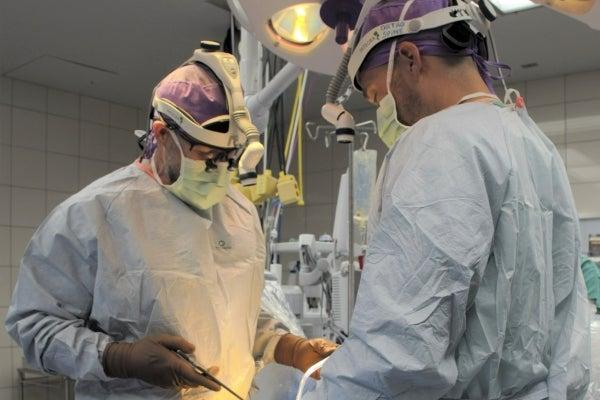
When you have a heart condition, surgery may be recommended as part of your care plan. Cardiovascular surgeons and interventional cardiologists at Ascension St. John deliver surgical treatments to help open clogged arteries, restore blood flow to the heart, repair leaky heart valves and more. Whenever possible, your doctor uses minimally invasive, catheter-based surgery. Minimally invasive surgery may be an option for your care, often meaning a shorter recovery time and lower risk of infection. But sometimes open-heart surgery is recommended.

Each appointment starts with a conversation between you and your heart surgeon. We listen to your concerns and answer your questions. Then, we work with you on a surgical care plan that’s right for you – from surgery to recovery and cardiac rehabilitation.

Reasons for heart surgery

Common conditions your doctor may treat with heart surgery:

An aneurysm is a bulging, weak area in the wall of a blood vessel. It may occur in any blood vessel but most often develops in an artery rather than a vein. An aneurysm can be categorized by its location, shape, and cause. The most common type of aneurysm is in the aorta. The aorta is the largest artery in the body. The aorta carries oxygenated blood from the heart to the body. A thoracic aortic aneurysm occurs in the chest cavity. An abdominal aortic aneurysm occurs in the abdomen.

An arrhythmia is an abnormal heart rhythm. An arrhythmia happens when there is a problem with the electrical system that is supposed to control a steady heartbeat. With a problem in the electrical system, your heart may beat too fast, too slow, or irregularly. Atrial fibrillation (AFib) is the most common type of abnormal heart rhythm.

The heart is a muscle that pumps oxygen-rich blood to all parts of the body. When you have heart failure, the heart can’t pump as well as it should. Or the heart muscle can’t relax and fill the pumping chamber with blood. Blood and fluid may back up into the lungs. This causes heart failure. Some parts of the body also don’t get enough oxygen-rich blood. This means they can't work well. These problems lead to the symptoms of heart failure, including shortness of breath, weight gain and swelling, fatigue, loss of appetite, nausea, belly pain and cough.

CAD is a disease that affects the arteries in your heart. These arteries supply oxygen and nutrients to your heart muscle. Sometimes, a fatty substance called plaque builds up along the inner walls of these arteries. This process is called atherosclerosis.

This heart condition affects one or more of the heart's valves. If blood doesn't flow properly when the heart valves open, the reasons can be leaky valves (regurgitation), too narrow (stenosis), or not opening properly (atresia). Heart and valve conditions can lead to a heart attack or progressive heart failure.

Types of heart surgery

Common heart procedures offered at Ascension St. John:

Angioplasty and stenting is a procedure to improve the blood flow in an artery or vein. The carotid artery is a large artery running along each side of your neck. During the procedure, a thin flexible tube (catheter) is put into an artery in your groin. It's gently threaded up into the problem area in the carotid artery. The catheter has a tiny, deflated balloon at the tip. When it reaches the narrowed part of your carotid, the balloon is inflated. This opens up the narrowed area. This is called angioplasty.

A tiny mesh tube (stent) may be put into this area. It's left in place to help keep the artery open.

Aortic dissection is a medical emergency. Early diagnosis and treatment are important. An aortic dissection is a tear (dissection) in the wall of the body’s main artery (aorta). The aorta sends blood from your heart to the rest of your body. A tear causes blood to get in between the aorta’s three layers. This reduces the amount of oxygen and nutrients that can get to your body’s organs.

Your cardiologist might suggest CABG to treat blocked or narrowed coronary arteries. CABG is a surgical technique used to restore healthy blood flow to the heart, improve heart function and reduce symptoms. Our experienced cardiac surgeons perform both on-pump CABG and off-pump CABG. The procedure is chosen based on the severity of the blockage in the coronary arteries.

Heart transplantation can improve survival, physical function, and quality of life for eligible patients with end-stage heart disease. You may need a heart transplant if your heart doesn't respond to medical therapy or a VAD.

If you are eligible for transplant listing, you will be placed on the waitlist. Wait times can vary from a few months to several years, depending on your size, blood type, tissue type and organ availability. A heart surgeon will replace your damaged heart with a healthy donor heart once one becomes available for you.

A heart transplant replaces a severely diseased or failing heart with a healthy donor heart, restoring the heart's ability to pump blood effectively. Your cardiologist will work with our dedicated transplant team and provide personalized care every step of the heart transplant journey, from evaluation and donor matching to surgery and lifelong follow-up.

A defibrillator wire is inserted into the heart and connected to an implanted device in the chest. It can send out electricity to either pace or shock the heart back into normal rhythm. This can be lifesaving when life-threatening rhythms are found.

A device may be used to close off the left atrial appendage in some cases. This can prevent stroke without having to use lifelong blood thinners. The left atrial appendage is the area within the heart where most blood clots form. By closing this area off, any clots that form there cannot get out to travel to the brain to cause a stroke. The device is implanted without heart surgery. This device is not right for everyone. It is generally considered in those who are at high risk for stroke, as well as high risk for bleeding. Even with the device, you may need to take blood thinners in the short-term.

Transcatheter aortic valve replacement (TAVR) is a procedure that replaces a diseased aortic valve with a man-made valve. The TAVR procedure may be recommended as an alternative to open heart surgery. The old heart valve is not removed but acts like an anchor for the new heart valve. This procedure is done through small cuts (incisions) using a long, thin tube (catheter), X-rays, and ultrasound.

Cardiac surgeons treat complex heart valve disease to repair damaged heart valves through open heart surgery and minimally invasive procedures, including TAVR and MitraClip™. When one or both of your valves do not open or close correctly, it can lead to reduced blood flow, cause the heart to work harder, and result in symptoms such as fatigue, shortness of breath, chest pain, fainting, or even heart failure.

A VAD is a mechanical device used to help the pumping function for one or both of the heart's pumping chambers (ventricles). It may be needed when heart failure gets to the point that medicines and other treatments no longer work. A VAD can help someone's heart work when they are waiting for a heart transplant. Or when someone is waiting to see if they are a candidate for a transplant. A VAD can also be a permanent treatment. And it can help a person's heart recover after surgery.

How to get care

stethoscope

When you are facing a serious diagnosis or deciding on a surgical treatment plan, there is a lot to think about. If you are looking for a second opinion for advanced heart care, talk with one of our heart surgeons. Minimally invasive or open-heart surgery may be recommended as part of your care plan.

Get a second opinion

It's easy to get a second opinion at Ascension St. John. We can review your medical records and healthcare history to answer your questions and discuss options for heart surgery.

When you are facing a new diagnosis or are deciding on a surgical treatment plan, there’s a lot to think about. If you are looking for a second opinion for advanced heart care, our cardiologists can also connect you with the right specialists for minimally invasive surgery, including transcatheter aortic valve replacement (TAVR). Our heart and vascular specialists can provide a second opinion, based on our experience and as part of a national care team.

Before your appointment, check with your insurance company to find out if a second opinion is covered. We can request your medical records on your behalf, so that they can be shared with your care team before your arrival.

phone_enabledCALL — 918-712-3366

Refer your patient to Ascension St. John

Your patients can expect compassionate, personalized care from the moment our specialists connect with them. Our heart surgeons start by listening to fully understand your patient’s needs and to develop an individualized care plan. To make a doctor referral, please call 918-712-3366.

phone_enabledCALL — 918-712-3366

If you are experiencing a life-threatening emergency, go directly to the ER or call 911.

All registered marks are property of their respective owners. All rights reserved.

Stories you'll love

Angela and her family

Helping the next generation of healthcare workers

February 4, 2026

Ascension St. John workforce development manager felt called to come back to the place where she started her career to help the Tulsa community explore careers in healthcare.

Read more stories