Chronic total occlusion

Heart specialists at Ascension St. John Heart and Vascular Center provide advanced care for chronic total occlusion (CTO).

Chronic total occlusion in Oklahoma

Heart specialists at Ascension St. John Heart and Vascular Center provide advanced care for chronic total occlusion (CTO).

Why choose us

As leaders in heart and vascular care, your team of specialists collaborate to deliver a personalized care plan that’s right for you. Our cardiologists are part of a national team of doctors, sharing best practices and advanced treatment options for CTO.

Understand chronic total occlusion (CTO)

Cardiologists at Ascension St. John are part of a national team of doctors, sharing best practices and advanced treatment options for chronic total occlusion (CTO). This heart condition occurs when there is a total blockage in one or more coronary arteries, and prevents blood containing oxygen and nutrients from flowing to your heart. CTO is a common heart disorder that occurs in 20 to 25 percent of patients with coronary artery disease (CAD). The condition is different from a heart attack because the blockage develops over a three month period of time and symptoms can worsen as the blockage increases.

Symptoms of CTO

Common symptoms of  CTO include:

  • Chest pain, pressure or tightness
  • Fatigue
  • Nausea
  • Rapid or irregular heartbeat
  • Pain in the upper body and arm
  • Shortness of breath, trouble breathing

CTO risk factors

Common risk factors for CTO include:

  • Diabetes
  • End-stage kidney disease
  • Family history of premature cardiovascular disease
  • High blood pressure
  • High LDL cholesterol or low HDL cholesterol
  • Known coronary artery disease or history of heart attack
  • Obesity
  • Postmenopausal women
  • Tobacco use

How we diagnose CTO

Diagnosis of CTO is based on your medical history, a physical exam and diagnostic tests and procedures, such as:

Your cardiologist may use a coronary angiography to see how blood is flowing through the coronary arteries to diagnose coronary artery disease (CAD) or angina and after a heart attack. Coronary angiography is a specialized type of X-ray that uses contrast dye and a catheter to take detailed images of your heart's blood vessels.

Your heart specialist uses echocardiograms, also known as heart ultrasounds, to create detailed images of your heart. This noninvasive test uses sound waves to show how your heart is beating and how well it's pumping blood. During the test, a transducer is placed on your chest. It sends out sound waves that bounce off your heart and create real-time images on a screen.

We offer electrocardiograms (EKGs or ECGs) to help quickly evaluate how your heart is working. This simple test records the electrical activity of your heart. The test uses small patches called electrodes that are placed on your chest, arms and legs to record your heart's electrical activity. You'll lie still while the machine creates a tracing of your heartbeat for your doctor to review.

Your heart specialist uses cardiac MRI to provide detailed images of your heart's structure and function without using radiation. A cardiac MRI uses powerful magnets and radio waves to create 3D images of your heart. It shows how your heart muscle, valves and blood vessels are working in real time. This test is often used when other imaging tests like echocardiograms or CT scans don't provide enough information.

A cardiac stress test measures how your heart responds to exercise or medication that mimics exercise. As your heart works harder, we monitor your heart rate, blood pressure and electrical activity to look for signs of reduced blood flow or other abnormalities. This test helps detect signs of heart disease and determine the cause of symptoms like chest pain, shortness of breath or arrhythmia to help your heart team create a personalized treatment plan.

How we treat CTO

Treatment for CTO may include:

A minimally invasive procedure that opens blocked coronary arteries to restore blood flow to the heart. A catheter is used to thread through a blood vessel to the blockage to navigate the occlusion. A balloon is then inflated to displace the plaque, and a stent is placed to keep the artery open.

Your cardiologist might suggest CABG to treat blocked or narrowed coronary arteries.

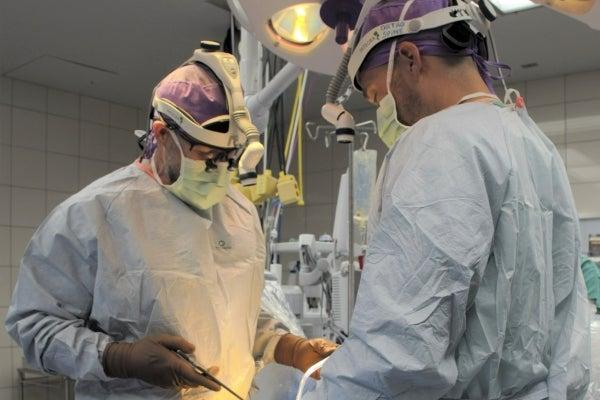
CABG is a surgical technique used to restore healthy blood flow to the heart, improve heart function and reduce symptoms. Our experienced cardiac surgeons perform both on-pump CABG and off-pump CABG, but the procedure is chosen based on the severity of the blockage in the coronary arteries.

On-pump CABG treatment is performed using a heart-lung machine to take over heart function during surgery temporarily. Cardiac surgeons will stop the heart and use the machine to circulate and oxygenate blood while performing complex bypass surgery.

Off-pump CABG, also known as "beating heart surgery," is performed without stopping the heart. This method keeps the heart beating while holding specific parts of the heart still, allowing your surgeon to complete a bypass.

Your doctor may prescribe medication that prevents plaque building up, eases the stress on your heart and reduces symptoms. These medications may include: antiplatelets, beta-blockers, angiotensin-converting enzyme (ACE) inhibitors, angiotensin receptor blockers (ARBs), and other medications.

Our heart care specialists perform percutaneous coronary intervention (PCI) using minimally invasive techniques to restore blood flow and relieve symptoms of coronary artery disease. This procedure uses a catheter to insert a balloon in your artery to open up blood flow. A stent is then added to keep the artery open.

How to get care

emergency

To make an appointment, a referral should be made by your primary care doctor or another specialist. Once the referral is received and reviewed, you will be contacted to schedule an appointment with a cardiologist.

If you are experiencing a life-threatening emergency, go directly to the ER or call 911.

All registered marks are property of their respective owners. All rights reserved.

Stories you'll love

Angela and her family

Helping the next generation of healthcare workers

February 4, 2026

Ascension St. John workforce development manager felt called to come back to the place where she started her career to help the Tulsa community explore careers in healthcare.

Read more stories