Helping the next generation of healthcare workers
February 4, 2026
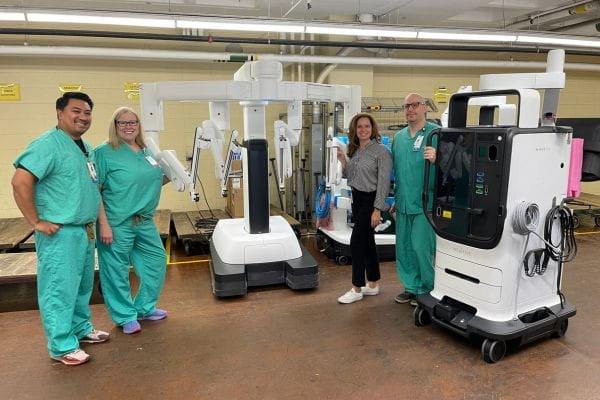
Ascension St. John workforce development manager felt called to come back to the place where she started her career to help the Tulsa community explore careers in healthcare.
Cardiac rehabilitation care teams at Ascension St. John provide personalized care for your heart after surgery or a heart attack.
When you choose Ascension St. John for personalized outpatient cardiac rehabilitation, you are receiving care from an American Association of Cardiovascular and Pulmonary Rehabilitation (AACVPR) certified program.
Cardiac rehabilitation is a medically supervised program that may be part of your cardiac treatment recovery plan. Whether you have a heart condition or are recovering from a heart attack or heart surgery, your cardiac rehab may be recommended to support your recovery. During your cardiac rehabilitation sessions, specialists monitor your heart and help you develop confidence as your heart gets stronger.
Pulmonary rehabilitation is also offered at Ascension St. John may be recommended if you have a lung disease such as chronic obstructive pulmonary disease (COPD), pulmonary hypertension, cystic fibrosis or asthma.
Common reasons your doctor may recommend cardiac rehabilitation:
A doctor's referral is required to participate in a cardiac rehabilitation program.
During cardiac and pulmonary rehabilitation, we monitor your heart and discuss medications. We also help you make nutrition and lifestyle changes to lower your cholesterol, manage your blood pressure, and improve your overall health. Your nurses and exercise specialists work with you to strengthen your heart and lungs and help manage your symptoms. We also help you cope with stress by providing support to you and your family.
Your care team coordinates care over a 12-week period. Most adults attend two to three sessions per week, Monday through Friday.

Our cardiac rehabilitation teams deliver care for the whole person to help improve your emotional and physical health. Your care team provides heart assessments and other tests to help monitor your progress, including:
This imaging procedure uses an X-ray machine and a computer to create 3-D pictures of the heart. Sometimes a dye is injected into a vein so that your heart arteries can also be seen. Sometimes medicine is given to lower your heart rate so it captures a better image. It can also be used to find out how much calcium is in your heart arteries. Calcium is a marker for coronary artery disease.
This procedure uses a combination of large magnets, radio waves, and a computer to make detailed images of organs and structures in your body. Your doctor may order an MRI of the heart to look at the heart valves and major vessels. It can also detect coronary artery disease and how much damage it has caused. It can also assess heart problems that have been present since birth. It can find tumors and other conditions. Your doctor may order this test before other procedures such as angioplasty or stenting of the coronary arteries and heart or vascular surgery.
For this test, you wear a small, portable, battery-powered ECG machine. Small patches (wired electrodes) are attached to the skin over your heart. The monitor records heartbeats over a period of 24 to 48 hours during normal activities. At the end of the time period, you will return the monitor to your doctor so it can be read and evaluated. Some Holter monitors can be worn for up to 2 weeks. These monitors are patches and don't require wires.
This is also called a treadmill or exercise ECG. This test is done to monitor the heart while you walk on a treadmill or pedal a stationary bike. Your doctor also monitors your breathing and blood pressure. A stress test may be used to detect coronary artery disease, or to determine safe levels of exercise after a heart attack or heart surgery. This test can also be done using special medicines that stress the heart in a similar manner as exercise does. Sometimes a stress test will collect ECG information along with heart ultrasound pictures. This is called an exercise or stress echocardiogram (echo). It's more sensitive and specific than ECG stress testing alone.
Cardiac rehabilitation can help speed up your recovery and keep your heart healthy. Our program focuses on:
Your care doesn’t end after completing your cardiac rehabilitation. We also provide supportive care and help connect you with community fitness programs. Ask about discounted memberships with no enrollment fee at the Ascension St. John Siegfried Health Club in Tulsa and Ascension St. John Jane Phillips Wellness Connection in Bartlesville.
A doctor's referral is required to participate in the program. Medicare Part B and other private health insurance plans provide a covered benefit for participating in general or intensive cardiac rehabilitation.
When you are deciding on a therapeutic treatment plan, there’s a lot to think about. If you are looking for a second opinion for advanced heart care, our cardiologists can also connect you with the right specialists.
Before your appointment, check with your insurance company to find out if a second opinion is covered. We can request your medical records on your behalf, so that they can be shared with your care team before your arrival.
Talk to your cardiology care team about whether cardiac rehabilitation is right for you. A referral from your doctor is needed before scheduling your first session.
If you are experiencing a life-threatening emergency, go directly to the ER or call 911.
All registered marks are property of their respective owners. All rights reserved.