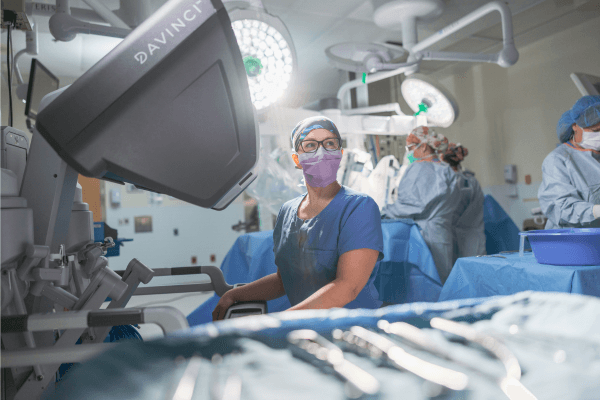
Is open-heart surgery the only option?
November 9, 2026
If you’ve been told you may need open-heart surgery, you may have other options.
Ascension Saint Thomas and Tennessee Oncology provide advanced, personalized breast and gynecologic cancer care through a collaborative approach to women’s cancer treatment.

Ascension Saint Thomas and Tennessee Oncology provide advanced, personalized breast and gynecologic cancer care through a collaborative approach to women’s cancer treatment.
At the Women’s Comprehensive Cancer Center, Ascension Saint Thomas and Tennessee Oncology work together to provide personalized cancer care focused on the unique needs of women.
Our breast and gynecologic cancer specialists provide care for breast, cervical, ovarian, uterine, vaginal and vulvar cancers. Your care team connects you with the specialists and services you need, from evaluation and diagnosis through treatment, recovery and survivorship.
Throughout your cancer journey, our team listens to your concerns, answers your questions and creates a care plan centered on you. Together, we provide comprehensive, compassionate women’s cancer care and support at every step.
Every cancer diagnosis is different. Your care team works with you to develop a treatment plan based on your diagnosis and individual needs.
Your treatment may include:
If surgery is part of your treatment plan, minimally invasive approaches may be used when appropriate. Your cancer specialists will explain your treatment options and what to expect.
Gynecologic cancer is cancer that begins in the female reproductive organs. Types of gynecologic cancer include cervical, ovarian, uterine, vaginal and vulvar cancers.
Our gynecologic oncology specialists provide advanced care for cancers and complex conditions of the reproductive system. Gynecologic oncologists provide an integrated approach to diagnosis, treatment and surgical care for:
From evaluation and diagnosis through treatment and recovery, your care team works with you to create a personalized plan.
A gynecologic oncologist is a doctor who specializes in diagnosing and treating cancers of the reproductive system.
Your doctor may recommend seeing a gynecologic oncologist when:
Symptoms vary depending on the type of gynecologic cancer. Talk with your doctor about new or ongoing symptoms, such as:
Having these symptoms does not mean you have gynecologic cancer. Talk with your doctor about symptoms that are new, unusual or do not go away.
Gynecologic oncologists provide specialized care for cancers that begin in the reproductive organs.
Often caused by HPV, cervical cancer develops in the cervix and is highly treatable when caught early.
Endometrial cancer is the most common type of gynecologic cancer and develops in the uterine lining.
Ovarian cancer begins in the ovaries and is often diagnosed at later stages. If you’re diagnosed with ovarian cancer, your treatment may include a combination of surgery and chemotherapy.
Vaginal cancer develops in the vagina. Your care plan will depend on your diagnosis and other individual factors.
Vulvar cancer develops in the outer part of the female genitals area. Evaluation by a specialist can help determine the diagnosis and appropriate treatment.
Gynecologic oncology specialists also evaluate pelvic masses and endometriosis when specialized surgical care may be appropriate.
Women diagnosed with breast cancer have access to personalized care from breast cancer specialists. Our team treats many types of breast cancer, including:
Family history can be an important part of understanding cancer risk. If you have a family history of breast or ovarian cancer, you may be at high risk for cancer.
If you have a family history of breast or ovarian cancer or a known inherited cancer risk, your doctor may recommend genetic counseling or testing.
Genetic and molecular testing may also help identify characteristics of a diagnosed cancer that can help inform treatment. Talk with your doctor about whether genetic counseling or testing may be appropriate for you.
Your evaluation will depend on your symptoms, health history, risk factors and previous test results. Your specialist will review the information available, explain what it may mean and recommend additional testing when needed.
Your specialist may review your symptoms, medical history, medication list and results from previous testing or treatment. This information helps your care team understand what has already been evaluated and what may need to happen next.
Pap and HPV test results may identify cervical changes that need further evaluation. Talk with your doctor about the cervical cancer screening schedule that is right for you based on your age, health history and risk factors.
Ultrasound, MRI or CT imaging may be used to evaluate your condition. The results can help your specialist better understand what is happening and guide the next step in your care.
Your care team may review existing biopsy and pathology reports or recommend a biopsy as part of your evaluation. These results can provide more information about the cells or tissue being evaluated.
Your doctor may recommend genetic or molecular testing based on your diagnosis or family history. Testing may help identify inherited risk or characteristics of a cancer that can help guide treatment decisions.
Once the evaluation is complete, your specialists use the findings to discuss the treatment options that may be appropriate for you.
Your treatment plan depends on the type of gynecologic cancer, your diagnosis and your individual needs. Treatment may include surgery, medication therapy, radiation therapy or a combination of treatments.
Depending on your diagnosis, surgery may include a hysterectomy or removal of the ovaries and fallopian tubes.
Robotic or laparoscopic approaches may be used when appropriate. Your surgeon will explain the recommended procedure, its possible benefits and risks, and what to expect before and after surgery.
If surgery could affect your ability to have children, talk with your cancer specialist about what the procedure may mean for you and any questions you have about fertility preservation.
Medication treatment may include:
Your gynecologic oncologist and medical oncologist will explain why a treatment may be recommended and how it fits into your overall care plan.
Radiation therapy may be recommended alone or in combination with surgery or medication treatment. Your radiation oncologist will explain why radiation may be part of your care and what to expect.
Clinical trials may provide another care option for some eligible patients.
Tennessee Oncology’s Greco Hainsworth Centers for Research is dedicated to improving cancer care through clinical research and access to promising therapies.
Ask your doctor whether a current clinical trial may be appropriate for your diagnosis and situation.
Cancer care includes support for your physical, emotional and spiritual well-being.
Your cancer care navigator and other members of your care team can help connect you with resources during treatment and beyond. Depending on your needs and where you receive care, support may include:
Ascension Saint Thomas offers a comprehensive cancer wellness program designed to support you throughout your cancer journey. Tennessee Oncology also offers integrative oncology services focused on lifestyle, symptom management and quality of life.
Your care team can explain which services are available and help connect you with the support that is right for you.
A second opinion can help you better understand your diagnosis and treatment options.
If you have a new gynecologic cancer diagnosis or are deciding about surgery or another treatment, a gynecologic oncologist at the Women’s Comprehensive Cancer Center at Ascension Saint Thomas Midtown can review your medical records and health history, answer your questions and discuss your options.
Before scheduling, check with your insurance company to find out whether a second-opinion visit is covered. Ask the care team which medical records are needed and how they should be shared before your appointment.
You may come to a gynecologic oncologist after an unexpected test result, imaging or biopsy finding, a referral or a cancer diagnosis.
If another doctor has referred you, follow the scheduling instructions provided by your referring doctor.
If you are not sure what to do next, request information from our team. We can help you understand the scheduling process and whether referral information is needed.
Before your appointment, your specialist may need information from previous testing or treatment, including:
If you have already been diagnosed with cancer, sharing your records before your appointment can help your doctor review your diagnosis and discuss treatment options or a second opinion.
Referral requirements may depend on the practice, your health plan and the type of care you need. Our care team can tell you what is required before your visit.
Find a gynecologic oncologist
Regular breast cancer screening can help find breast cancer early. Talk with your doctor about when to begin mammograms and how often to have them based on your age, health history and individual risk factors.
Gynecologic cancer is cancer that begins in the female reproductive organs. The main types include cervical, ovarian, uterine, vaginal and vulvar cancers.
A gynecologic oncologist specializes in diagnosing and treating cervical, ovarian, uterine, vaginal and vulvar cancers. Gynecologic oncologists may also provide specialized evaluation or surgical care for conditions such as pelvic masses or endometriosis.
An unexpected screening result may require additional evaluation, but it is not by itself a cancer diagnosis. Your doctor can explain your result and whether additional testing or specialist care is recommended.
Referral requirements can depend on the practice, your health plan and the type of care you need.
Ask the care team which records they need before your visit.
Depending on your situation, you may be asked to provide imaging and imaging reports, biopsy or pathology results, Pap or HPV results, relevant medical records, a current medication list and referral information if required.
Yes. A gynecologic oncologist can review your medical records and health history, answer your questions and discuss your diagnosis and treatment options.
Before scheduling, check with your insurance company to find out whether a second-opinion visit is covered.
When you are ready to take the next step, breast and gynecologic cancer care is available at:
If you are experiencing a life-threatening emergency, go directly to the ER or call 911.
All registered marks are property of their respective owners. All rights reserved.
November 9, 2026
If you’ve been told you may need open-heart surgery, you may have other options.

October 27, 2026
An annual low-dose CT lung scan led Middle Tennessee resident Nelle to life-saving, robotic-assisted surgery with Dr. John Lazar at Ascension Saint Thomas West.

October 23, 2026
After her 2024 gastric bypass surgery with Dr. Nadine Rampp at Ascension Saint Thomas Rutherford in Murfreesboro, Kristi lost 100 pounds and reclaimed an active life with her daughter.
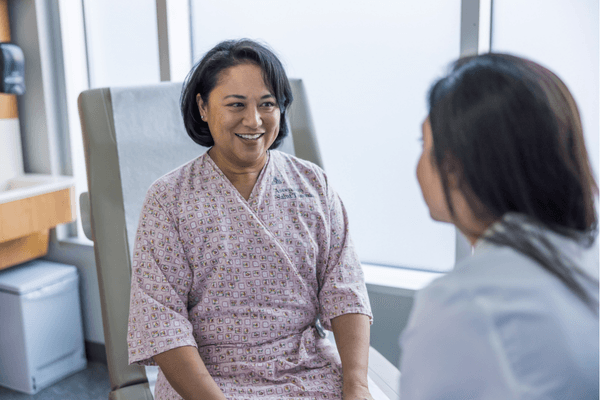
October 22, 2026
An abnormal Pap smear doesn’t always mean something is “wrong.” Learn about follow-up testing and when to see a gynecologic oncologist.
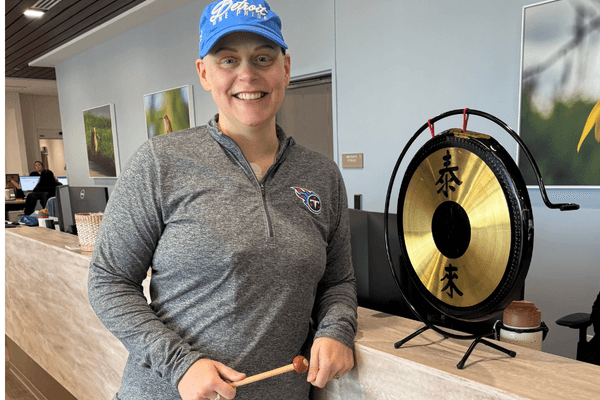
October 19, 2026
After diagnosis in Nashville, a local mother beat stage 3 breast cancer through collaborative care with Dr. Limberg at Ascension Saint Thomas and Dr. Mitchell at Tennessee Oncology.
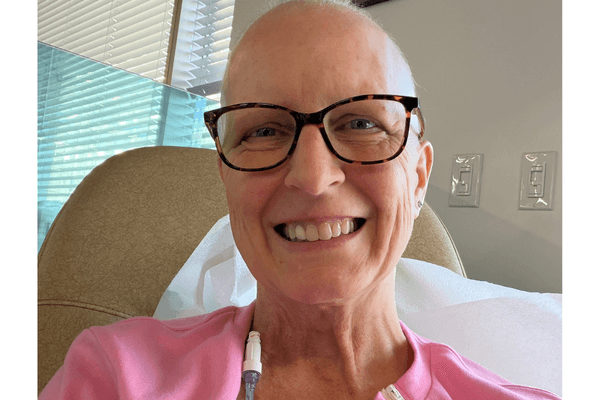
October 14, 2026
Longtime Nashville nurse Amanda successfully beat stage 4 abdominal cancer after undergoing emergency surgery and treatment at Ascension Saint Thomas Midtown last fall.
October 5, 2026
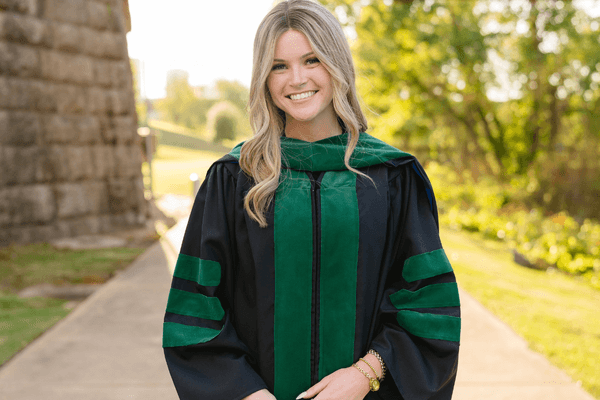
Reagan Phillips beat aggressive breast cancer with care from Dr. John Zubkus at Ascension Saint Thomas Rutherford in Murfreesboro before starting her emergency medicine residency in August 2026.

September 30, 2026
After being diagnosed with advanced-stage ovarian cancer, Laura overcame the disease with care from Dr. Mali Schneiter at Ascension Saint Thomas Midtown in Nashville, Tennessee.

September 29, 2026
At 33, Nashville mom Macy Page found a breast lump while breastfeeding and was diagnosed at Ascension Saint Thomas with BRCA1-linked Stage 3 triple-negative breast cancer.

September 16, 2026
Dolores Campbell overcame stage 3 ovarian cancer after receiving swift, life-saving surgery and chemotherapy from Mali Schneiter, DO, at Ascension Saint Thomas Midtown in Nashville.

August 5, 2026
After years of struggling, Rutherford resident Larina lost over 200 pounds following bariatric surgery with Dr. Stephen Rich at Ascension Saint Thomas Rutherford.

July 22, 2026
To fulfill an Ascension Living Alexian Village Tennessee resident’s dying wish, activities coordinator Amber Beam brought the New York Metropolitan Opera to Chattanooga, Tennessee.

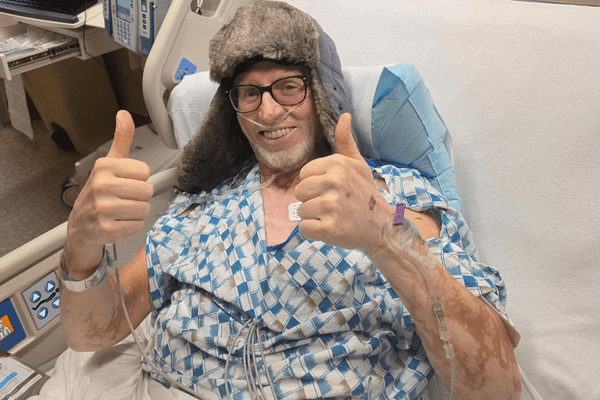
Songwriter David Schmelhaus found life-saving care and spiritual strength during his battle with acute leukemia at Ascension Saint Thomas Midtown in Nashville, Tenn.
April 24, 2026
Middle Tennessee resident Roy Zacharias found life-saving care for Stage 3 esophageal cancer from Dr. John Lazar at Ascension Saint Thomas West in Nashville.

January 28, 2026
At just 26 years old, a Nashville mother receives specialty heart care for women at Ascension Saint Thomas Heart Women’s Center during her second pregnancy.

January 28, 2026
After two decades of seeking care for her heart symptoms, a referral to the Women's Heart Center at Ascension Saint Thomas Heart in Nashville, TN, gives a great-grandmother more time to enjoy her growing family.
January 26, 2026
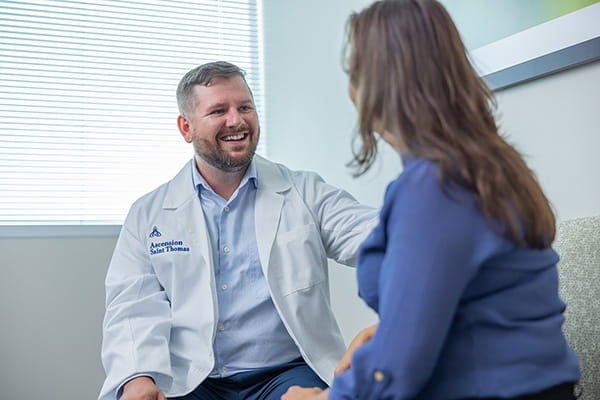
Dr. Robert Rampp, general and endocrine surgeon at Ascension Saint Thomas Rutherford, helped a Murfreesboro native detect thyroid cancer and saved his life.

December 31, 2025
A Lascassas, Tenn., couple received a heart bypass and kidney transplant at Ascension Saint Thomas Hospital West on the same day, then recovered and went home together.

December 11, 2025
After years of struggling with her weight, Stephanie turned to Ascension Saint Thomas Rutherford in Murfreesboro for bariatric surgery that changed her life.

December 5, 2025
In 2024, Dr. Stephen Rich, helps a patient with his bariatric journey at the Ascension Saint Thomas Bariatric Center.
November 17, 2025
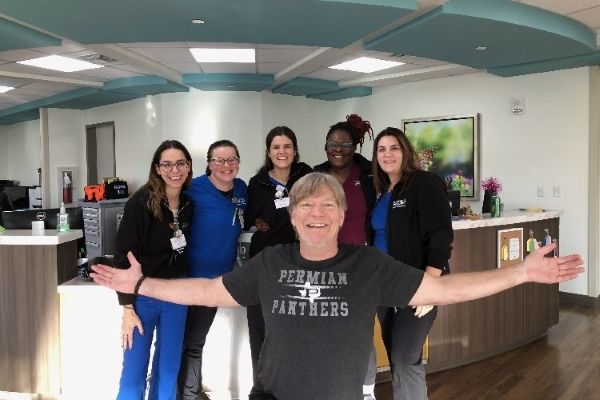
A routine lung scan at Ascension Saint Thomas in Nashville revealed a hidden tumor in 63-year-old Greg Hall, leading to life-saving treatment and recovery.

October 31, 2025
After undergoing bariatric surgery at Ascension Saint Thomas Rutherford, Ellen regained the energy to fully enjoy life again.
October 24, 2025
Using advanced ION robotic technology, the care team at Ascension Saint Thomas Rutherford helped a Murfreesboro resident detect and treat lung cancer early.

In June 2016, Mt. Juliet, Tennessee resident Sharon Nowlin began her fight against ovarian cancer with Ascension Saint Thomas and Tennessee Oncology doctors Johnetta Blakley and Alpa Nick in Middle Tennessee.

Now 27, Morgan reflects on her journey with breast cancer and the care she received at the Ascension Saint Thomas Women’s Comprehensive Cancer Center in Nashville, Tennessee.

September 17, 2025
With the help of the Ascension Saint Thomas Joint Replacement Institute, a Nashville woman overcame joint pain and is now thriving on the set of ABC’s 9-1-1 Nashville.

July 8, 2025
Dr. Mark Manwaring, colon and rectal surgeon at Ascension Saint Thomas Rutherford in Murfreesboro, Tennessee helps a patient find answers to symptoms that suggest Crohn’s disease.

If incidents occur this Fourth of July, knowing where and when to get immediate and emergency care is important.

June 23, 2025
Ascension urgent care and orthopedic teams are here to help you manage your summer injury.

After being diagnosed with prostate cancer in early 2023, a Nashville resident turned to Ascension Saint Thomas West, where expert urologists Dr. Adnan Dervishi and Dr. Mark Sittig provided advanced prostate cancer care.

Over a decade later, Saint Thomas is relaunching the Nothing Shall Be Impossible campaign rooted in faith, driven by medical excellence, and growing to meet the needs of tomorrow.

Ascension Saint Thomas West Hospital in Nashville, TN, quickly responds to patients experiencing strokes and provides neurology and rehabilitation care to help with recovery.
In January 2024, longtime CNA discovered she had an ischemic stroke, and Dr. Lani Thomas performed a life-saving thrombectomy at Ascension Saint Thomas Rutherford in Murfreesboro, TN.

Dr. Bobby Rampp, general surgeon at Ascension Saint Thomas Rutherford, performed robotic bilateral hernia surgery to relieve a former Foundation board member’s severe abdominal symptoms.

A Nashville woman shares her story of overcoming rectal cancer with early detection and support from Ascension Saint Thomas for Colon Cancer Awareness Month.
February 7, 2025
Dr. Robert Rampp, an endocrine surgeon with Ascension Saint Thomas Rutherford in Murfreesboro, Tennessee, helped treat a mother of three who found a thyroid nodule during a routine MRI.
Dr. Hannah Fish-Trotter, a cardiologist at Ascension Saint Thomas Heart, helped treat a mother of two with a diagnosis and treatment of a heart defect found after pregnancy.
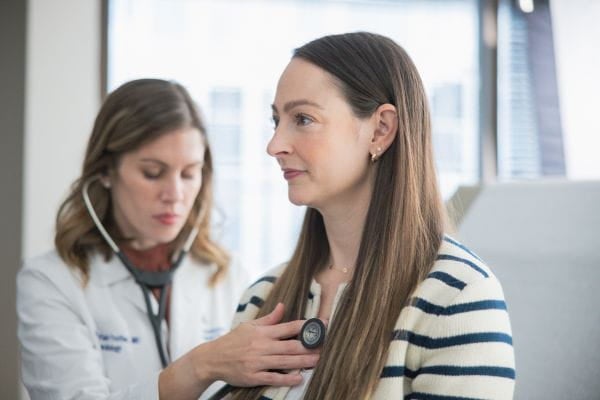
Ascension Saint Thomas Heart is launching the Women's Program to transform cardiovascular care for women through prevention, early detection and a multi-disciplinary approach in Middle Tennessee.
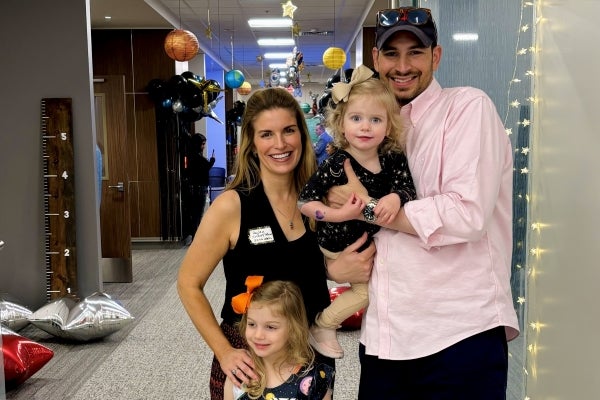
Hayley Wielgus had a premature birth at Ascension Saint Thomas, where support from the care team helped her daughter thrive after a four-week NICU stay.

November 8, 2024
Thoracic surgeon Dr. John Lazar at Ascension Saint Thomas in Nashville, Tennessee treated a patient’s severe airway condition with a robotic-assisted tracheobronchoplasty.

October 14, 2024
John McEuen, a founding member of the Nitty Gritty Dirt Bands is celebrating his life, thanks to the expert cardiac care he received at Ascension Saint Thomas Hospital West in Nashville.

September 26, 2024
Dr. Jason Barnett, a gynecologic oncologist at Tennessee Oncology, helped treat a mother of two with a diagnosis of ovarian cancer that had spread to other parts of her body while receiving care at Ascension Saint Thomas Midtown.
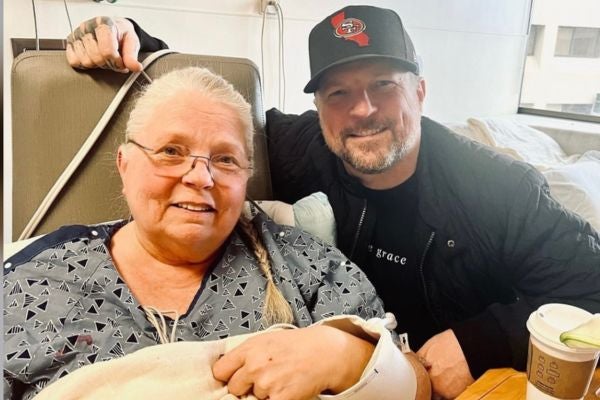
John Spooner, MD, neurosurgeon at Howell Allen Clinic with Ascension Saint Thomas in Nashville, TN, helps a grandmother with a large brain aneurysm get back to creating art.
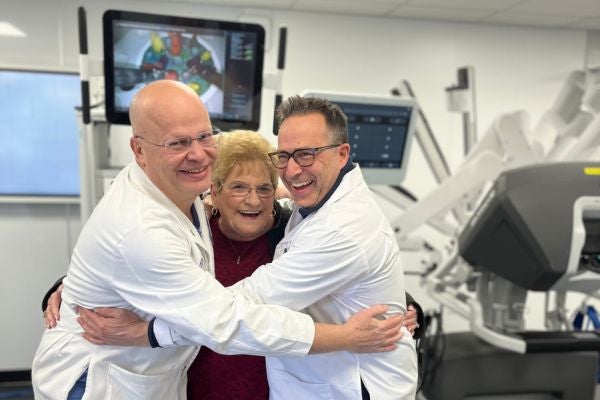
Lung cancer teams at Ascension Saint Thomas Hospital West in Nashville, TN, perform Ion robotic bronchoscopy and resection for the first time in hospital history.

Mark A. Zenker, MD, cardiologist at Ascension Saint Thomas Heart's Hypertrophic Cardiomyopathy Clinic, research with CAMZYOS helps grandmother feel better.

Ascension Saint Thomas Hospital West Kidney Transplant Center helps Nashville mom get a second chance with a hepatitis C kidney transplant.

Brooke got a second chance with a kidney transplant at Ascension Saint Thomas Hospital West Kidney Transplant Center in Nashville, TN.

September 26, 2023
Cardiologist Dr. Ricardo Lugo becomes Tennessee's first cardiologist to insert the Micra™ VR2 wireless pacemaker in a patient.

Knoxville man urgently receives a new heart and a second chance at life at Ascension Saint Thomas Heart in Nashville, TN.

Murfreesboro man gets emergency heart care when going into cardiac arrest during a prostate cancer removal at Ascension Saint Thomas Rutherford.

April 5, 2023
A Nashville couple turns to Ascension Saint Thomas Kidney Transplant Center for a kidney transplant, where a patient receives his wife's kidney.