
Triple-negative breast cancer at 22
July 29, 2026
In February 2025, 22-year-old Shelby Bennoit became cancer-free after treatment for stage 2B triple-negative breast cancer at Ascension Saint Agnes in Baltimore.

Cancer specialists at Ascension Saint Agnes deliver advanced care for pancreatic, liver and biliary cancers, including complex surgery and second opinions
At Ascension Saint Agnes, our cancer specialists and surgical oncologists provide coordinated, personalized care for pancreatic, liver and bile duct cancers. We combine advanced surgical expertise with medical, radiation and interventional therapies to support you at every step of your care.
A cancer diagnosis can raise many questions and concerns. At Saint Agnes, we take time to listen to you, understand your needs and help you navigate next steps with clarity and compassion.
The Pancreas, Liver and Bile Duct (PLBD) Center of Excellence specializes in diagnosing and treating pancreatic cancer, liver cancer and biliary cancers. Whether you are newly diagnosed with cancer or seeking a second opinion, our team is here to support you.
We are committed to timely access to care. After receiving a referral, our cancer care team will contact you within 48 hours to discuss next steps.
When you choose Ascension Saint Agnes, your care is guided by a multidisciplinary care team with experience in hepatobiliary cancers. Our specialists collaborate closely to develop a personalized treatment plan based on your diagnosis, overall health and care goals.
Your care team may include:
Working together as one care team helps us consider all treatment options and provide coordinated support throughout your diagnosis, treatment and recovery.
Your doctors and care team deliver a care plan customized for you. We treat many types of pancreatic, liver and biliary cancer, including:
Your cancer care team focuses on identifying if the tumor is noninvasive or invasive, understanding where the tumor began, and whether or not the cancer has spread. We use advanced molecular studies to recognize pancreatic cancer subtypes to create a tailored care plan.
To diagnose pancreatic, liver and biliary cancer, your doctor may recommend testing, such as:
An Aspira drain (often called an Aspira drainage catheter) is a medical device used to remove excess fluid from the body, usually in people with cancer or chronic conditions.
Often shortened to “SpyGlass,” this minimally invasive endoscopic procedure allows your doctor to see directly inside the bile ducts and perform targeted diagnosis or treatment.
ERCP is a procedure used to diagnose and treat problems in the liver, gallbladder, bile ducts and pancreas. During the procedure, your care team gently guides a thin, flexible tube with a light and camera through your mouth into your stomach and small intestine to look for any concerns. They may then inject a special dye into the bile and pancreatic ducts so these areas show clearly on X-ray images, helping identify blockages or other issues. Your team will support you throughout and focus on keeping you as comfortable as possible.
Radiation therapy kills cancer cells with beams of high-energy X-rays (called photons) or charged particles (called electrons or protons). It can be used in many ways, depending on the type of cancer you have and where it’s located in your body.
Your cancer care team provides support from nutrition education and counseling to cancer support groups, yoga and spiritual care. At Ascension Saint Agnes sites of care, our healing gardens and chapels are always open to patients and your loved ones. We offer supportive care and activities for the whole you.
Surgery plays an important role in treating many pancreatic, liver and bile duct cancers. Our surgical oncologists specialize in complex hepatobiliary procedures and work closely with other cancer specialists to determine if surgery is appropriate.
Surgical oncology services may include:If surgery is part of your treatment plan, it may be combined with therapies such as chemotherapy or radiation to support your recovery and provide the best possible care.
Call - 443-574-8500
Deciding on a cancer treatment plan can feel overwhelming. A second opinion can provide additional insight, confirm your diagnosis or help explore other treatment options.
A second opinion can be especially important if you’ve been told surgery isn’t an option. Our surgical oncologists frequently evaluate complex cases to determine whether advanced surgical or combined treatments may be appropriate.
Our team will help coordinate your second opinion visit, gather medical records and determine whether a virtual visit is available.
Your doctor and care team get to know you well, and you’ll receive care for the whole person – from physical health and well-being to mental and emotional health. At Ascension Saint Agnes, we provide innovative medication treatments, the latest surgical technologies and techniques, high-tech radiation facilities and support services. When you choose Ascension Saint Agnes, you get a national team of experienced cancer specialists, sharing best practices and the latest in cancer care knowledge and research.
When you choose Ascension Saint Agnes, you get an entire team dedicated to your care. You may have a lot of concerns and questions. Your doctor and care team are ready to listen and answer your questions. Working together, we offer services that help support your treatment plan, including managing pain and other symptoms, medications, appetite changes, sleeplessness, fatigue and mood changes. Your entire care team stays connected throughout your care to discuss your treatment and progress.
Referring providers can expect timely communication and collaborative care. Our specialists focus on listening first, then developing an individualized treatment plan in partnership with the patient and referring physician.
Our surgical oncologists accept referrals for:
We prioritize rapid access and multidisciplinary case review.
Providers: To refer a patient, call - 443-574-8500
If you are experiencing a life-threatening emergency, go directly to the ER or call 911.
All registered marks are property of their respective owners. All rights reserved.
July 29, 2026
In February 2025, 22-year-old Shelby Bennoit became cancer-free after treatment for stage 2B triple-negative breast cancer at Ascension Saint Agnes in Baltimore.
July 24, 2026
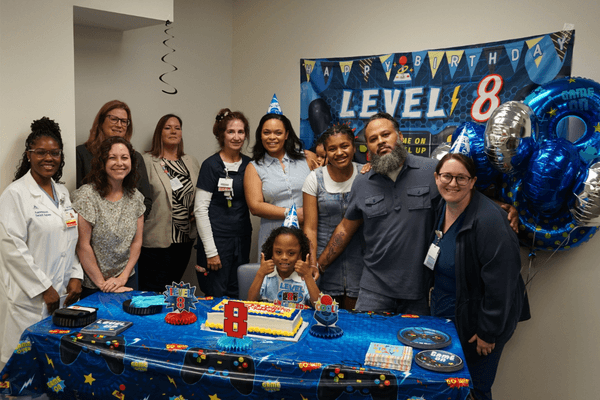
A former 24-week preemie returned to Ascension Saint Agnes Hospital in Baltimore to celebrate his eighth birthday and reunite with the NICU team that saved his life.

A Maryland couple decides to make a new commitment in their marriage by getting bariatric surgery at Ascension Saint Agnes Weight-Loss Program in Baltimore, Maryland.

If incidents occur this Fourth of July, knowing where and when to get immediate and emergency care is important.

June 23, 2025
Ascension urgent care and orthopedic teams are here to help you manage your summer injury.