
Do people with early heart disease have symptoms?
September 21, 2026
Signs of heart disease aren’t always obvious. Some people notice chest discomfort, shortness of breath or unusual fatigue, while others don’t notice any changes at all.
Heart doctors at Ascension Illinois in Chicagoland deliver specialized care for AFib and other heart arrhythmias.

Heart doctors at Ascension Illinois in Chicagoland deliver specialized care for AFib and other heart arrhythmias.
Heart doctors at Ascension Illinois provide comprehensive care for atrial fibrillation (AFib) and the full spectrum of heart rhythm disorders. Our electrophysiology teams offer advanced diagnostic testing, personalized medical therapy, implantable devices, and minimally invasive procedures to help restore normal heart rhythm, improve symptoms, and reduce the risk of stroke, heart failure, and sudden cardiac events.
When you choose Ascension Illinois for heart rhythm care, your care team is part of a nationally recognized cardiovascular program with more than 100 cardiologists and cardiac surgeons statewide. Our electrophysiologists treat both routine and complex arrhythmias using advanced technology and a collaborative approach that brings together cardiology, electrophysiology, and cardiac surgery when needed.
Heart arrhythmias occur when the electrical signals that control your heartbeat do not work properly. These rhythm disorders can cause your heart to beat too fast, too slow, or irregularly.
Arrhythmias we commonly treat include:
Some arrhythmias cause noticeable symptoms, while others may have no symptoms and are discovered during testing. Our specialists work with you to understand your condition and choose the most appropriate treatment.
Common symptoms heart arrhythmias include:
Your cardiologist may recommend one or more tests to understand how your heart is beating, identify the type of rhythm condition you have, and guide treatment decisions.
Our heart care teams use ambulatory heart monitoring to help detect and evaluate irregular heart rhythms that may not appear during an office visit. These simple tests record your heart’s activity while you go about your daily routine, giving your cardiologist a better understanding of your heart health.
Ambulatory monitors are small, wearable devices that record your heart’s electrical activity over a period of time to identify irregular heart rhythms (arrhythmias). This diagnostic tool helps guide treatment decisions, and monitor how well your current heart care plan is working.
A blood test is a lab analysis of things that may be found in your blood. You may have blood tests to keep track of how well you are managing a condition, such as diabetes or high cholesterol. You may also have them for routine checkups or when you are ill.
A chest X-ray is a quick, noninvasive imaging test that provides a detailed picture of the inside of your chest, helping your care team detect signs of a heart condition.
It's used to check the heart's function and structures. During the procedure, a transducer (like a microphone) sends out sound waves at a frequency too high to be heard. When the transducer is placed on the chest at certain locations and angles, the sound waves move through the skin and other body tissues to the heart tissues. The waves bounce or "echo" off the heart structures. These sound waves are sent to a computer that can create moving images on the screen of the heart walls and valves.
Our cardiology team uses advanced diagnostic tools and expertise to accurately identify a wide range of cardiac issues, ensuring you receive the right care as early as possible.
Our cardiology team uses advanced diagnostic tools and expertise to accurately identify a wide range of cardiac issues, ensuring you receive the right care as early as possible.
For this test, insulated electric catheters are placed through the large vein in the upper leg and threaded into the heart. It's used to test the heart's electrical system. It helps your doctor look at what might be causing abnormal heart rhythms.
An implantable loop recorder is a small device placed under the skin of the chest to continuously monitor heart rhythm over months or years. It can help diagnose irregular heartbeats, unexplained fainting, or symptoms that occur only occasionally.
This is also called a treadmill or exercise ECG. This test is done to monitor the heart while you walk on a treadmill or pedal a stationary bike. Your doctor also monitors your breathing and blood pressure. A stress test may be used to detect coronary artery disease, or to determine safe levels of exercise after a heart attack or heart surgery. This test can also be done using special medicines that stress the heart in a similar manner as exercise does. Sometimes a stress test will collect ECG information along with heart ultrasound pictures. This is called an exercise or stress echocardiogram (echo). It's more sensitive and specific than ECG stress testing alone.
This test is similar to a transthoracic echocardiogram. But it's done with medicine to help you relax (sedation). It's considered invasive because a probe is put into your body. In this test, you will swallow a small probe about the size of your thumb. The probe passes down the esophagus, which lies directly behind the heart. It allows a much closer look at the heart's structure and function than a standard echocardiogram done on the skin of the chest. It can better look at heart valve structure and function. Your doctor can better see any blood clots that may be in the heart.
Treatment for AFib and other heart arrhythmias is individualized and may include medication, procedures, implantable devices, or surgery.
Cardioversion is a procedure that uses controlled electrical energy or medication to restore the heart to a normal rhythm. It may be recommended for people experiencing certain irregular heartbeats, including atrial fibrillation.
This procedure uses radio frequency energy or freezing to get rid of problem areas in the heart that cause abnormal heart rhythm. The abnormal area is found during an electrophysiology study. This study maps the electrical activity that controls the heart rhythm. This procedure can diagnose and potentially cure abnormal heart rhythms.
For appropriate patients, AFib ablation and left atrial appendage closure may be performed during the same procedure, addressing rhythm control and stroke prevention in a single setting.
The convergent procedure is a hybrid treatment for patients with persistent or longstanding persistent AFib who have not responded to medication or catheter ablation alone. It combines minimally invasive surgical ablation on the outside of the heart with catheter-based ablation inside the heart, coordinated by electrophysiologists and cardiac surgeons.
Left atrial appendage (LAA) closure procedures help reduce stroke risk in patients with non-valvular AFib who are unable to take long-term blood thinners. Using minimally invasive procedures such as the WATCHMAN™ device, heart specialists close off the LAA to prevent blood clots from entering the bloodstream and causing a stroke.
Your cardiologist may recommend medications to help manage your heart condition. Mediation may be used to lower blood pressure, prevent blood clots, lower cholesterol and more.
CRT helps the heart beat in a more coordinated way in select patients with heart failure and electrical conduction delays.
ICDs protect patients at risk for life-threatening ventricular arrhythmias by continuously monitoring heart rhythm and delivering therapy when dangerous rhythms occur.
Lead extraction is a specialized procedure used to safely remove one or more pacemaker or ICD leads when they become infected, damaged, or no longer function properly, or when device upgrades are needed. The procedure is performed by experienced electrophysiology teams using advanced tools and imaging.
Small, self-contained devices implanted directly inside the heart without leads.
Leadless pacemakers reduce the risk of lead-related complications and are appropriate for select patients.
Pacemakers help treat slow heart rhythms and heart block by maintaining an appropriate heart rate.
Placed under the skin without leads inside the heart or blood vessels. S-ICDs reduce the risk of bloodstream or lead-related complications and are appropriate for select patients who do not need pacing.
Surgical maze procedures may be performed for complex or longstanding AFib, either as a standalone treatment or during other heart surgery.
Traditional ICDs implanted under the skin with leads placed inside the heart.
Traditional pacemakers placed under the skin with leads that travel through veins into the heart.
Our electrophysiologists participate in cardiovascular research and clinical trials aimed at improving arrhythmia care, treatment strategies, and long-term outcomes.
Decisions about your heart care are important. Getting a second opinion not only provides more information about your condition, but it can help you feel more confident in the doctor and the care plan you choose. Consider getting a second opinion if:
To make an appointment, a referral should be made by your primary care doctor or another specialist. Once the referral is received and reviewed, you will be contacted to schedule an appointment with a cardiologist.
If you are experiencing a life-threatening emergency, go directly to the ER or call 911.
All registered marks are property of their respective owners. All rights reserved.
September 21, 2026
Signs of heart disease aren’t always obvious. Some people notice chest discomfort, shortness of breath or unusual fatigue, while others don’t notice any changes at all.

September 17, 2026
Stress doesn’t directly cause a UTI, but it can affect your body in ways that make urinary symptoms feel worse. Stress and anxiety can also trigger overactive bladder symptoms that may feel similar to a UTI. A urogynecologist shares tips to help tell the difference.

August 25, 2026
Sciatica pain can make it difficult to sit, sleep, walk or stay active. The good news? Simple self-care strategies at home may help relieve pain, reduce inflammation and improve mobility.
August 25, 2026
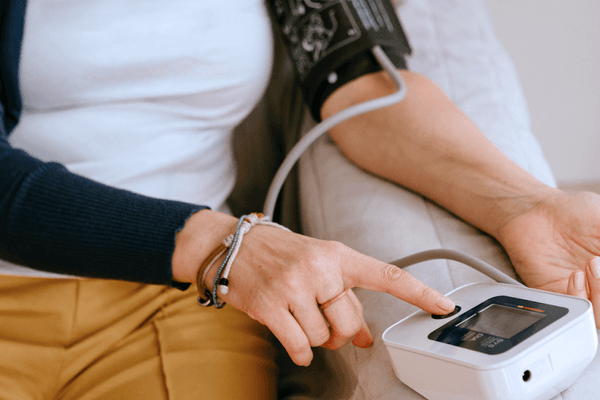
Blood pressure readings include two numbers: systolic and diastolic. Together, they show how much pressure blood puts on your artery walls when your heart beats and rests. An ideal blood pressure reading is less than 130/80.
August 19, 2026
After a ruptured brain aneurysm in March 2026, an Itasca resident regained independence through collaborative care and rehabilitation at Ascension Alexian Brothers Rehabilitation Hospital.

After decades of knee pain, a left knee replacement at Ascension Saint Alexius in Hoffman Estates helped a retired barber get back to golf with care from orthopedic surgeon, Dr. Paul S. Nourbash.

February 18, 2026
Ascension Alexian Brothers Behavioral Health Hospital Behavioral Health therapist, Kelly Hayden, shares four ways you can overcome seasonal blues this winter.

February 4, 2026
Ascension Illinois cardiologist Dr. Andrei Pop shares how harsh winter weather affects the heart, and what you can do to protect yourself.

Kelly Hayden, MA, LCP, NCC, behavioral health therapist at Ascension Alexian Brothers Behavioral Health Hospital shares ways first responders can manage the stress of the holidays.

If incidents occur this Fourth of July, knowing where and when to get immediate and emergency care is important.

June 23, 2025
Ascension urgent care and orthopedic teams are here to help you manage your summer injury.
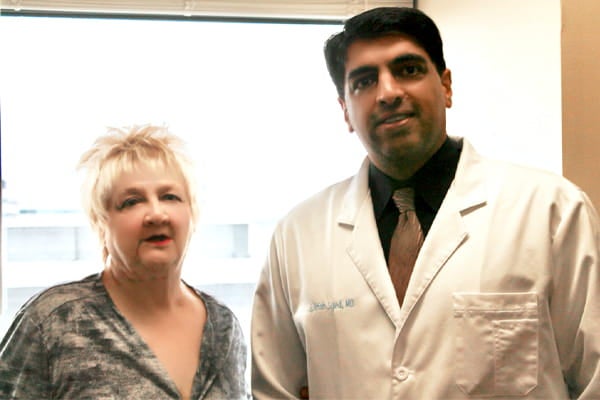
Salahuddin Syed, MD, psychiatrist at Ascension Alexian Brothers Behavioral Health Hospital in Hoffman Estates, Illinois, treats patients with advanced depression with electroconvulsive therapy.

April 17, 2025
Sarah Briley, EdD, LCPC, CADC, service line director for adult services at Ascension Alexian Brothers Behavioral Health Hospital, shares five ways being in community with others can benefit your mental health.

Gastroenterologist, Bipan Chand, MD, at Ascension Illinois, helps man recover from cancer for the second time by using a robotic colon resection.

Bipan Chand, MD, a gastroenterologist at Ascension Illinois in Chicago, performed a robotic colon resection to treat diverticulitis, a colon disease.
Neurosurgeon at Ascension Illinois performs life saving craniectomy on a young stroke survivor.

Breast cancer at a young age didn’t defer this Wheeling woman’s dream trip to Antarctica thanks to the Ascension Alexian Brothers care team.

A Rockford, IL woman lost 111 pounds at the age of 24 after having gastric bypass surgery at Ascension Alexian Brothers.
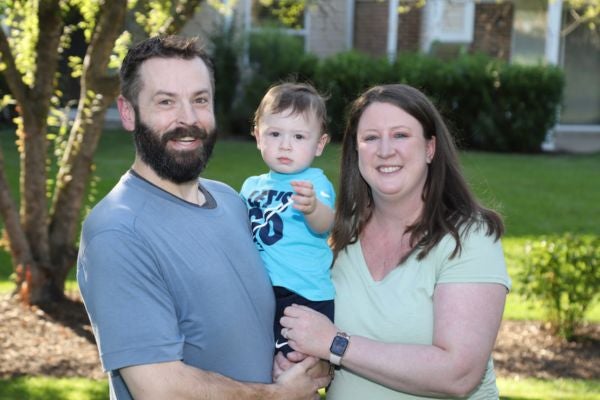
Gastric sleeve surgery at Ascension Alexian Brothers helped this Elk Grove Village man lose 285 pounds and gain a family.

September 7, 2023
A long relationship of trust with her OB-GYN at Ascension Illinois led to the removal of a massive growth from her uterus.
September 5, 2023
This Illinois woman was tired of dealing with incontinence, so she found care at Ascension Saint Alexius in Hoffman Estates, IL.

An Ascension Saint Alexius pain specialist got this student athlete back on her feet. Now she’s helping others recognize the symptoms of CRPS.

August 18, 2023
On this Healthcast episode, Ascension Illinois cardiologist Baqir Lakhani walks you through heart failure symptoms and the latest treatment options.
April 27, 2023
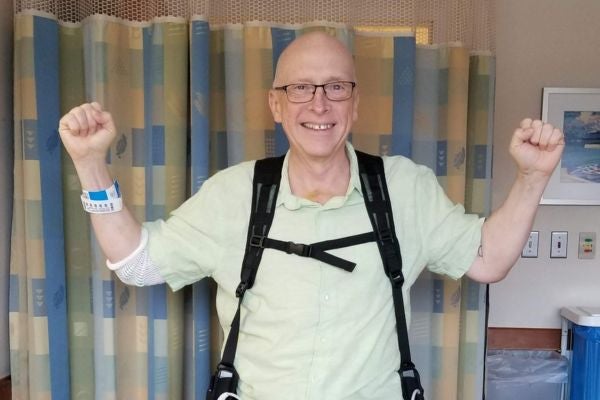
Matt is doing more than surviving. He’s thriving thanks to his indomitable spirit, his Illinois care team and heart pump implant technology.

After a fall almost caused her to give up on music, Jewel returned to her passion with help from a caring pain management specialist.

February 27, 2023
A Chicago-based anxiety expert and clinical director at Ascension Illinois, Katie Torres shares ways to decrease overthinking with three exercises you can do right now.