Cancer is Personal- So Is The Way We Care for You
Ascension St. Vincent Cancer Care brings the best of cancer care to you
Delivering personalized care that's right for you
Cancer specialists who know you and your condition review your treatment and progress. They work together to customize your overall care plan to support your physical well-being and mental and emotional health.
Ascension St. Vincent Cancer Care offers comprehensive breast cancer care, including:
-
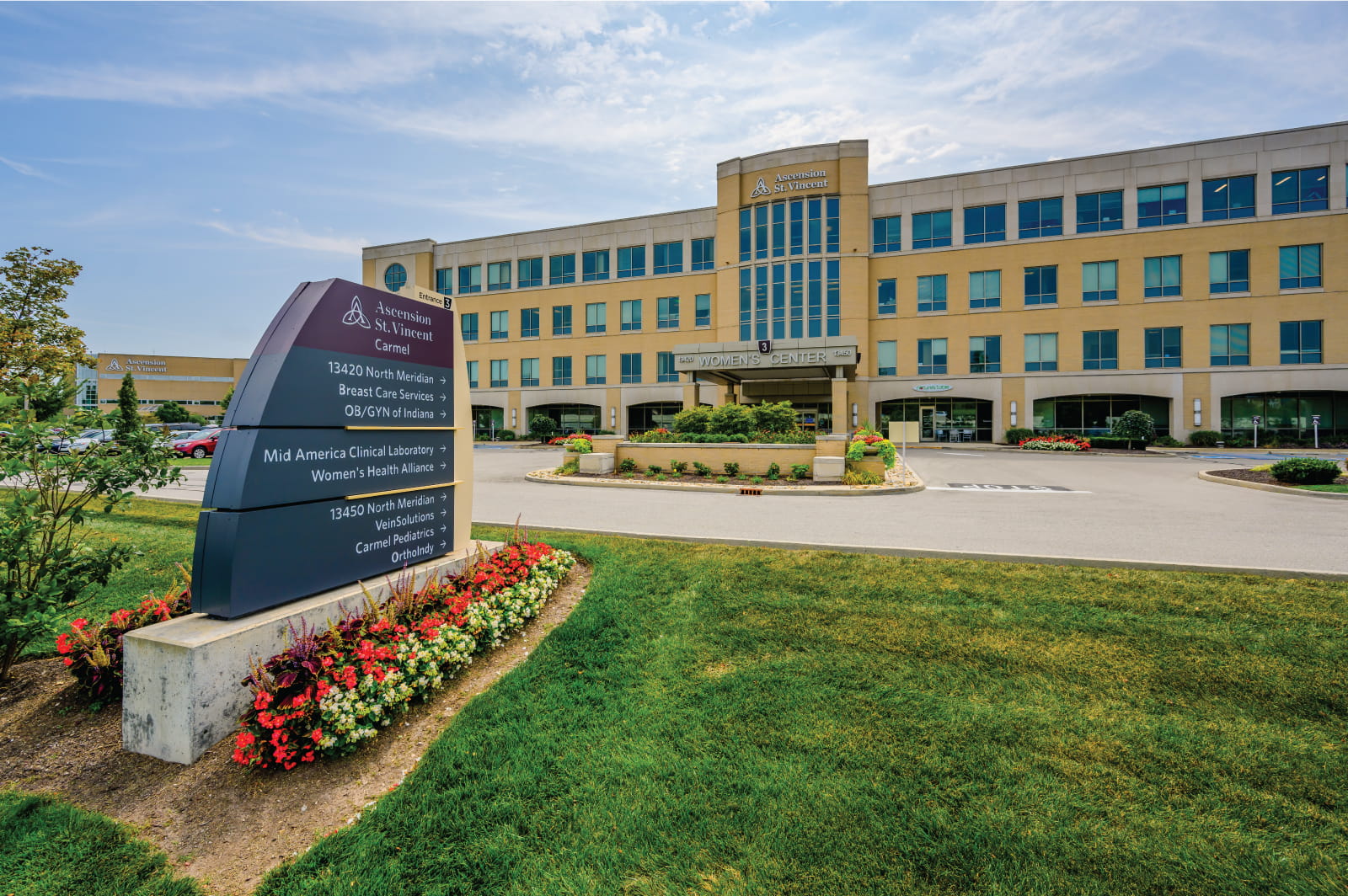
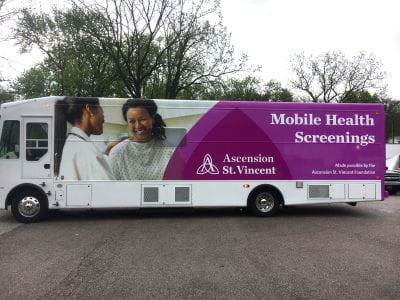 Breast radiology — We offer imaging locations close to home – from dedicated breast imaging centers to women’s health centers and our mobile mammogram program. The latest imaging supports mammogram screening and diagnostic tests for advanced care. We offer:
- 3D mammograms
- Breast ultrasounds
- Abbreviated breast MRIs
- Magnetic seed or wire localization
- Percutaneous needle biopsies
- High-risk breast cancer program — at Ascension St. Vincent Carmel Women’s Center, we offer a comprehensive approach to identifying and monitoring an individual’s risk for developing breast cancer. If you have a family history of breast cancer, we specialize in assessing your risk, coordinating cancer genetic screenings, and management of benign breast diseases.
- Breast surgery — Surgeons specialize in breast-conserving lumpectomy using smaller, more precise incisions and nipple sparing mastectomy. Our patients can discuss options for immediate breast reconstruction, during consultation with a plastic surgeon.
- Medical oncology — Medical oncologists work with your breast surgeon to deliver advanced care (chemotherapy, hormone therapy and targeted immunotherapy) to help stop cancer spread.
- Radiation oncology — Advanced radiation therapy is used to target and destroy cancer cells while avoiding the surrounding healthy tissue.
- Clinical trials — If you want to learn more about other possible cancer care options, talk to your doctor. You may want to ask whether cancer clinical trials are the right option for you.
- Genetic counseling and testing — If you are high risk or have a family history of breast cancer, we deliver cancer genetic screening, testing and counseling to help you and your doctor better understand your risk for developing cancer.
- Oncology rehabilitation with lymphedema therapy — Specially trained physical therapists deliver therapy to help manage lymphedema symptoms, such as swelling and pain.
- Nurse Navigators - Upon your cancer diagnosis, or when you come to us during your cancer care, you’re paired with a cancer care navigator. Your care team and navigator will help you schedule appointments, connect with other services you need, and support you along the way. When you have a concern or feel unsure, don’t hesitate to talk with your care team and ask your questions.
- Support programs — Ascension St. Vincent Cancer Care provides virtual education and support programs at no cost to you. We offer weekly cancer support groups, a caregiver group, art classes, meditation and a variety of educational programs. Events are all virtual, so you can participate from the comfort of your own home.
- Healing through Fitness — This in-person fitness program is designed to help improve your physical fitness after cancer treatment. The program meets twice a week for six weeks and is tailored to your fitness goals.
What Sets Us Apart
Our highly skilled breast surgeons offer several innovative techniques to ensure the care you receive is personal to you.
- Nerve reinnervation
- CTDNA Monitoring
- DCIsionRT testing
- Perioperative and survivorship physician therapy using new technologies to detect lymphedema as early as possible
- Robust Plastic surgery offerings including DIEP (Deep inferior epigastric perforator) flap reconstruction
Single-port robotic nipple-sparing mastectomy (SP-RNSM) is an advanced surgical technique that improves both physical and emotional outcomes for patients undergoing breast cancer or preventative mastectomies. By accessing the breast through a small incision in the armpit, this approach avoids cutting the breast skin, helping preserve nerve function and allowing many patients to retain partial sensation. It also delivers superior cosmetic results, leaving little to no visible scarring and creating an ideal foundation for immediate reconstruction. The precision of the single-port robotic system enhances safety by protecting blood supply to the skin and nipple, reducing complications and supporting faster recovery. Best suited for select patients based on cancer stage, anatomy, and overall health, SP-RNSM represents a significant step forward through its combination of minimally invasive technique, improved aesthetics, and collaborative reconstruction options.
-
The Benefit: Preservation of Sensation
In traditional mastectomies, the nerves supplying the breast are almost always stretched or severed, leaving the reconstructed breast completely numb. This loss of sensation can severely impact a woman's quality of life and sexual well-being.
- Nerve Sparing: Because the single-port robot enters the breast cavity from the side (through the armpit) rather than through the front of the breast, the procedure is much gentler on the nerves.
- Clinical Results: Recent pioneering trials (notably out of UT Southwestern) have shown astonishing results, with upwards of 65% to 80% of SP-RNSM patients retaining measurable sensation in their breast skin and the nipple-areolar complex.
-
Superior Cosmetic Outcomes
The goal of a nipple-sparing mastectomy is to remove the dangerous breast tissue while leaving the patient's natural "envelope" (the skin and nipple) intact. The single-port robot elevates this significantly.
- One Hidden Scar: Instead of a large scar across the breast, the surgeon uses a single, small incision (often just 2.5 to 4 centimeters) hidden away in the axilla (armpit).
- Flawless Canvas for Reconstruction: Because the breast skin itself is never cut, plastic surgeons can immediately step in and place a tissue expander or implant, resulting in a reconstructed breast that looks remarkably natural and unscarred.
-
Built for the Anatomy (Single-Port vs. Multi-Port)
Earlier attempts at robotic mastectomies used "multi-port" systems, which required several robotic arms approaching from different angles. This was incredibly clumsy when operating just beneath the skin of the chest wall.
- No "Sword Fighting/Multiple Ports": The single-port robot (like the da Vinci SP) feeds a 3D camera and three fully articulating, wristed instruments through a single, narrow tube.
- Navigating the Curve: The flexible instruments can open up inside the breast pocket and easily navigate the natural curvature of the ribs and chest wall, giving the surgeon extreme precision without stretching or tearing the delicate skin flap.
-
Safety and Tissue Viability
The precision of the robot translates directly to better surgical safety and healing.
- Better Blood Supply: Because the robot allows the surgeon to meticulously peel the breast tissue away from the skin, it is much easier to preserve the tiny blood vessels that keep the skin and nipple alive.
- Lower Necrosis Rates: Studies show that SP-RNSM has very low rates of "flap necrosis" (where the preserved skin or nipple dies due to lack of blood flow) compared to standard open techniques.
- Low Complication Rates: Patients generally experience a smooth recovery with low rates of hematomas or infections, and often benefit from shorter hospital stays.
-
Who is a Candidate for SP-RNSM?
Surgeons look at three main factors when determining if a patient is eligible for a single-port robotic nipple-sparing mastectomy: the nature of the disease, the patient's anatomy, and lifestyle factors.
- The "Ideal" Medical Profile: * Prophylactic (Preventative) Patients: Women with high-risk genetic mutations (like BRCA1 or BRCA2) who are choosing to remove healthy breast tissue to prevent cancer.
- Early-Stage Breast Cancer: Patients with Ductal Carcinoma In Situ (DCIS) or early-stage, small, node-negative invasive cancers.
- Tumor Location: For cancer patients, the tumor must be located a safe distance away from the nipple, areola, and the surface skin. If the cancer is invading the skin or is located right behind the nipple, a nipple-sparing approach of any kind is oncologically unsafe.
- Anatomical Considerations:
- Breast Size and Shape: The procedure is generally most successful for patients with small to moderate breast sizes (typically A through small D cups). Importantly, patients should have minimal to moderate ptosis (sagging). Severe drooping makes it technically difficult for the robot to navigate and drastically increases the risk that the nipple won't get enough blood supply to survive.
- Body Mass Index (BMI): A healthy BMI is generally preferred, as obesity can complicate the robotic approach and increase the risk of delayed healing.
-
Part 2: Reconstruction Techniques
Single-Port Robot allows the breast surgeon to operate through a small 3-4 cm incision hidden in the lateral bra line or axilla. Robotic surgery also improves visualization with less tissue trauma and potential for improved breast sensation. Once the surgical oncologist removes the breast tissue, a plastic surgeon steps in immediately. They are handed a pristine, unscarred "canvas" to work with.
- Implant-Based Reconstruction (The Most Common):
- Direct-to-Implant (DTI): If the preserved skin is healthy and has excellent blood flow, the permanent silicone or saline implant can be placed right away. The patient wakes up with their reconstructed breasts fully formed.
- Tissue Expanders: If the skin needs time to adjust,radiation may be required, or if the surgeon wants to play it safe with the blood supply, they will place a deflated "expander." Over several weeks, this expander is slowly filled with saline to gently stretch the skin before being swapped for a permanent implant, or for natural tissue at a subsequent procedure.
- During these implant procedures, surgeons may use material such as Acellular Dermal Matrix (ADM)—a sterile, biologic mesh—to help support the implant or tissue expander and maintain its position on the chest wall.
- Autologous Reconstruction (Using Your Own Tissue):
- Historically, doing complex tissue flaps through a tiny armpit incision was nearly impossible. However, cutting-edge centers (like UT Southwestern) are now successfully performing natural tissue reconstruction using microvascular techniques through smaller incisions. This is a massive leap forward for women who want natural tissue reconstruction without the traditional scarring.
- Fat Grafting: Often used as a finishing touch, surgeons will use liposuction to take a small amount of fat from another part of the body and inject it around the implant or flap to smooth out the contours and make the breast look and feel completely natural.
-
What is your cancer center known for?
Your doctor and care team get to know you well, and you’ll receive care for the whole person – from physical health and well-being to mental and emotional health to support for your family and caregivers. At Ascension St. Vincent Cancer Center, we provide innovative medication treatments, the latest surgical technologies and techniques, high-tech radiation facilities and support services. Our breast surgeons are part of a national team of cancer specialists sharing the latest in cancer care knowledge and research.
At Ascension St. Vincent, we provide many advanced treatments, including:- Breast-conserving surgery
- Breast reconstruction and reshaping
- Breast surgery with SAVI SCOUT® technology
- Chemotherapy
- Hidden Scar™ breast surgery
- Hormone therapy
- Immunotherapy and advanced targeted drug therapy
- Lymph node transplantation
- Minimally invasive breast biopsy with [magnetic seed, fine needle, wire] localization
- Radiation treatments (including brachytherapy, external beam, stereotactic radiosurgery and stereotactic radiation therapy)
-
Does breast screening help detect cancer early?
Getting regular breast health screenings and health checkups may help find breast cancer early, when it’s most treatable. We recommend women get a mammogram each year, starting at age 40, or earlier if you have a family history of breast cancer. When you choose women’s health and breast specialists at Ascension St. Vincent for your care, you are connected to all the care you need – from routine screenings to advanced care.
-
What tests are used to diagnose breast cancer?
Your care team focuses on identifying if the tumor is non-invasive or invasive and to understand where the tumor began and whether or not it has spread. Diagnostic blood testing, breast imaging (3D mammogram, breast MRI, breast ultrasound) and a biopsy of breast cells help your doctor diagnose your condition and stage even the most rare cancers. And we use advanced genetic and molecular studies to recognize breast cancer subtypes and hormone receptors (HER-2, PR, ER) to create a care plan for your type of cancer.
-
Who is on my cancer care team?
Hearing the word cancer comes with a lot of thoughts and emotions, and we’re ready to support you. You'll meet with your doctor to discuss your diagnosis and your care options. At Ascension St. Vincent, your care team may include:
- Breast surgeon
- Breast nurse navigators
- Mastectomy bra fitters
- Medical oncologist
- Oncology-certified nurses, dietitians and social workers
- Oncology-certified pharmacist
- Palliative care specialist
- Plastic surgeons - reconstructive breast and nipple surgery
- Radiation oncologists
- Radiologists specializing in breast imaging
- Rehabilitation therapists, including lymphedema therapists
-
Who should I call when I have questions?
When you choose Ascension St. Vincent for your cancer care, you get an entire team dedicated to your care. You may have a lot of concerns and questions. Your doctor and care team are ready to listen and answer your questions. Working together, we offer services that help support your treatment plan, including managing pain and other symptoms, medications, appetite changes, sleeplessness, fatigue and mood changes. Your entire care team stays connected throughout your care to discuss your treatment and progress.
-
Is financial assistance and support available?
We can connect you with resources and programs that may be able to help you and your family with options for financial assistance. Our financial counseling team is here to listen to your concerns and work with you to help find options that meet your needs. Your cancer care navigator can connect you to a financial counselor.
-
Where do I park?
At Ascension St. Vincent Cancer Center and clinics, we offer convenient parking, by a valet if needed. Talk to your care navigator if you have transportation needs.
-
My doctor told me about an enhanced recovery program. What is that?
Surgical oncologists and anesthesiologists provide enhanced recovery pathways as part of your surgical care plan. They are an important part of our cancer treatment programs. Each pathway is personalized for different types of cancer treatment, to help speed up your recovery after surgery. Your care team uses these protocols to help you prepare for what to expect before, during and after surgery.