New baby, new boundaries: A holiday guide for families
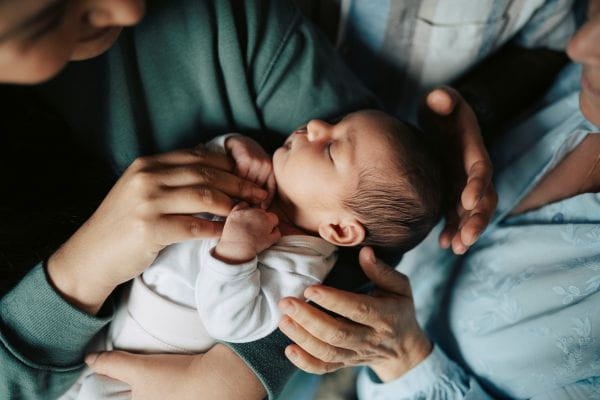
A pediatric specialist’s advice on setting boundaries with a new baby
It’s 2 a.m. Your baby isn’t even here yet — or maybe they’re finally asleep — and you’re wide awake thinking about the holidays.
What if someone wants to kiss the baby?
What if a relative shows up with a cough?
How do you ask for your baby back without making things awkward?
And are you really expected to pack up a newborn and travel to visit family because “that’s what we always do”?
“The holidays can bring a lot of excitement around a new baby,” says Octavia Slevinski, APRN, an advanced practice registered nurse specializing in pediatrics. “For first-time parents, setting boundaries can feel almost as stressful as enforcing them.”
The good news? A little planning can help you set expectations before everyone gathers.
Decide on your boundaries before the gathering
Before the holidays, start by deciding what priorities feel right for your family. You don’t need a long list of rules. Instead, it can be helpful to focus on the boundaries that matter most to you.
Maybe you’re fine with a house full of relatives but don’t want anyone kissing the baby. Maybe you want visitors, but only one or two at a time. Or perhaps traveling with a newborn is more than you want to take on this year.
Once you’ve decided what works for your family, let relatives know your boundaries ahead of time, suggests Slevinski. “It’s usually easier to explain a boundary before a gathering than when someone is already reaching for the baby.”
Keep visits manageable
You don't have to have an open-door policy because there's a new baby in the house.
Schedule visits instead of accepting drop-ins if that works better for your family. You can also keep visits short or say that another day would work better if you're tired.
You don’t have to entertain a house full of relatives while you're recovering from birth and caring for a newborn. Someone who’s eager to help could bring dinner or take care of a household chore while you rest.
If you have a partner, decide ahead of time who will handle boundary-setting conversations with relatives. Sometimes it's easier for each person to communicate boundaries with their own family.
Ask sick visitors to wait
Ask anyone who’s sick to postpone their visit until they’re feeling better.
Newborns and young infants can be more vulnerable to certain infections. Respiratory syncytial virus (RSV), for example, can spread through coughs and sneezes, close contact and contaminated surfaces.
"An illness that might feel mild to an adult can be much harder on a newborn," explains Slevinski. "Someone doesn't have to feel very sick to pass an infection along, so it's important to take even mild symptoms seriously."
Let family and friends know that anyone with a fever, cough, vomiting, diarrhea, new rash or other signs of a contagious illness will need to visit another time.
If someone has recently been exposed to an illness and you're unsure whether it's safe for them to visit, check with your baby's pediatrician.
What to say: “We can't wait for you to meet the baby. If you're having any cold or stomach symptoms, let's reschedule for when you're feeling better.”
Decide who can hold or kiss the baby
You don't have to pass your baby around. You get to decide who holds your newborn, for how long and whether you're comfortable with kisses.
Visitors (and really anyone for that matter) should wash their hands before touching or holding your baby. Because close contact can spread infections, some parents choose a no-kissing rule while their baby is young.
What to say: "We're asking everyone not to kiss the baby right now."
And when you're ready to take your baby back? A simple “I'll take them now, thanks” is enough.
Let feeding and sleep take priority
Your newborn doesn't know it's Christmas dinner.
They may need to eat just as everyone sits down. They might fall asleep when relatives want photos or become fussy halfway through a gathering.
Follow your baby’s cues rather than trying to make everything fit the day's schedule. Step away to breastfeed or bottle-feed if you want privacy.
“You don’t need to wake a sleeping baby for pictures or stay at a gathering longer than is comfortable for your family,” says Slevinski.
What to say: “We're following the baby's needs today, so we may need to step away or head home early.”
If you're traveling to someone else's home, think about where your baby will nap before you go.
“An adult bed or couch might seem like a convenient place for a quick nap during a family visit, but those aren't safe sleep spaces for babies," says Slevinski. "Even a short nap needs an appropriate place for your baby to sleep.”
The American Academy of Pediatrics recommends placing babies on their backs for every sleep on a firm, flat sleep surface, such as a crib or bassinet, without loose bedding or soft objects.
So if you'll be staying overnight, ask where the baby will sleep before you arrive.
Give yourself permission to change the travel plan
Traveling with a newborn can turn a simple holiday visit into a much bigger undertaking.
A drive that used to be easy may now involve extra stops for feeding and diaper changes. An overnight trip means bringing more supplies and making sure your baby has a safe place to sleep.
If your baby was born prematurely, has a health condition or is sick, talk with your pediatrician about your travel plans.
You might decide that a shorter visit is more realistic than staying overnight. Or that, this year, your relatives need to come to you.
What to say: “We're not ready for an overnight trip yet, but we'd love to plan a shorter visit.”
“It also helps to have an exit plan,” adds Slevinski. “Decide ahead of time when you’d like to leave or agree on a signal that means it's time to go.”
Set boundaries for photos and social media
Decide how you feel about people taking and sharing photos of your baby before the holiday pictures begin.
Maybe you're okay with relatives taking pictures and sharing in group texts but don't want them posted online. Or perhaps you'd rather share your baby's first holiday photos yourselves.
Then let people know what you’re comfortable with before the cameras come out.
What to say: “You're welcome to take pictures, but please ask us before sharing or posting any.”
You don't need to justify your family's approach to social media but it does help to make it clear, says Slevinski.
Know when to call your pediatrician
Contact your baby's pediatrician if you're concerned about symptoms or aren't sure whether your baby needs medical attention.
“For babies younger than 12 weeks, a fever of 100.4°F (38°C) or higher requires medical evaluation right away,” says Slevinski.
You can also talk with your baby's pediatrician before the holidays if you have questions about visitors or illness precautions, she adds. You don't need to wait until something is wrong to ask for guidance.
Your first holiday as a parent gets to be different
The holidays don't have to look exactly the way they used to — and that’s okay.
Maybe go to the big family gathering and only stay for an hour. Maybe you celebrate at home instead of making the trip you’ve always made.
“And if you need to change plans at the last minute, that’s part of caring for a new baby,” reminds Slevinski.
Make room for what your family needs now, and let the traditions grow with you.
Next steps and helpful resources
Learn about Studer Family Children’s Hospital Pediatrics

Last updated: noviembre 5, 2026