Diabetic patient makes bracelets to inspire others
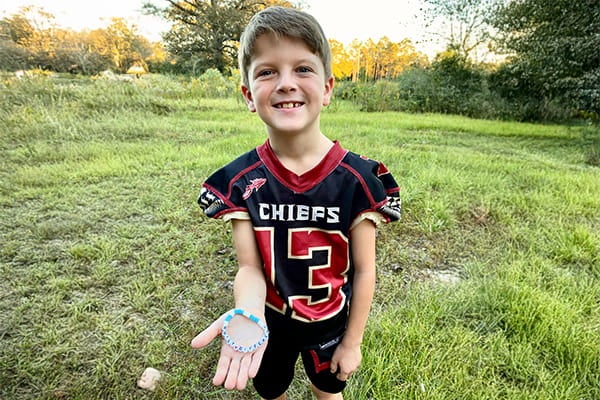
A patient and his mom make bracelets for kids with Type 1 diabetes two years after his diagnosis at Studer Family Children’s Hospital in Pensacola, Florida.
At Studer Family Children’s Hospital in Pensacola, the care that is given to our patients and their families often inspires a movement that continues our mission of compassion, such as a small bracelet created to bring hope to kids living with Type 1 diabetes.
Ask Russell what “Type 1 Strong” means and he answers without hesitation. “It means I am strong enough to take on anything, even the harder things God knew I could handle instead of someone else,” he shared.
He came up with the idea for the bracelets and with help from his mom, Bonnie, makes them with two short, powerful phrases, “Type 1 Strong” and “Built Different,” so kids feel strength and belonging. Their goal is to reach newly diagnosed kids and families across Northwest Florida at hospital and community events.
Russell and his mom hand the bracelets out in the hospital and across the community as simple gifts meant to encourage others. Russell hopes the bracelets make kids feel happy when they receive one. He is just a kid hoping to help another kid with a simple reminder that, “you are not alone.”
Before his diabetes diagnosis, Russell began struggling in school. He was unusually tired and constantly thirsty. Early signs of diabetes can include being very thirsty, using the bathroom more than usual, feeling extra tired, losing weight without trying, belly aches, blurry vision, or mood changes. If your child is experiencing these symptoms, reach out to a pediatrician like Russell’s parents did.
One morning, after he slept much later than usual, his symptoms were noticeably worse, so his parents called his pediatrician and were advised to go to the pediatric emergency department at Studer Family Children’s Hospital. Testing confirmed Type 1 diabetes. He had a short stay in the Pediatric Intensive Care Unit (PICU) for initial stabilization and education. Then he began insulin therapy, and met with an endocrinologist to create a clear management plan for going home.
When diagnosed with Type 1 diabetes, your doctor is looking at how your child’s body uses sugar for energy. When your child needs extra help, our care teams help guide families with everyday tools so kids can keep doing the things they love.
For Russell, managing his diabetes became a daily routine, not a roadblock. With the right school support, life stays as normal as possible. Russell has a 504 Plan, a simple written agreement that helps teachers, coaches, and staff know how to respond when needed. It outlines where medications are kept, who he can tell if he doesn't feel well, when to pause for a quick blood sugar check or snack, and what adults should do in an emergency.
As part of his care, Russell uses an insulin pump. A pump site was created so the pump can connect to the skin. It is covered with adhesive and placed where it is comfortable and safe. It does not keep Russell from being active. He still runs, practices and competes in sports. Over the summer, he finished his first sports season with a pump.
If you think your child may have diabetes, talk with your pediatrician. Early testing can help identify high blood sugar and connect your family with the right care team, including pediatric endocrinologists, diabetes educators, and nutrition specialists, to help your child live a healthy, active life.
At Studer Family Children’s Hospital, our pediatric endocrinologists, diabetes educators, and nutrition specialists provide compassionate, family-centered care for children like Russell, and help them live healthy and active lives.
Last updated: octubre 30, 2025