A childhood full of possibilities: Claire’s Chiari journey at Dell Children’s
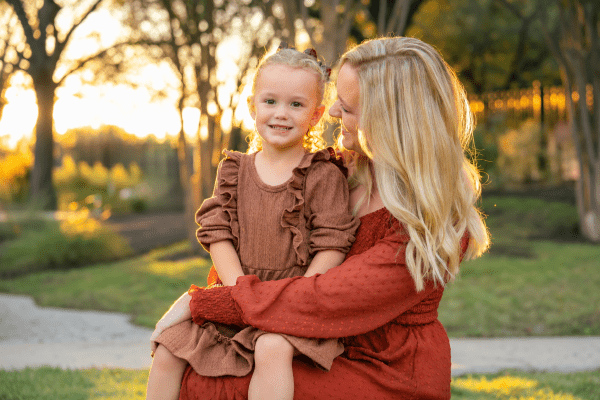
When 2-year-old Claire was diagnosed with Chiari I malformation, her family turned to Dell Children’s in Austin, Texas, for specialized pediatric neuroscience care.
At 2 years old, Claire was doing what most toddlers do. She was growing, playing, and discovering the world around her.
But her parents began noticing something concerning.
Claire would occasionally grab the back of her head and complain of numbness and tingling in her arms and legs.
An MRI revealed that Claire had Chiari I malformation, a condition in which part of the brain extends into the opening at the base of the skull. In Claire’s case, the condition was also beginning to affect her spinal cord.
For her parents, the diagnosis brought more questions than answers.
“We didn’t know what this meant for her future,” her mother recalls. “Would she be able to run and play? Go to school?”
At UT Health Austin Pediatric Neurosciences at Dell Children’s, Claire’s family found a team of pediatric specialists working together to create a care plan that considered more than her diagnosis.
A team working together for Claire
As part of Dell Children’s nationally ranked pediatric neurology and neurosurgery program, recognized by U.S. News & World Report, the Chiari Type I Malformation Clinic brings together specialists across multiple service lines to provide coordinated care for children with complex neurological conditions.
Before Claire’s first evaluation, a multidisciplinary team of specialists reviewed her case and considered her symptoms, imaging results, age, and developmental needs.
“Claire’s case was presented to our multidisciplinary team conference,” said Elias Rizk, MD, PhD, pediatric neurosurgeon and co-chief of UT Health Austin Pediatric Neurosciences at Dell Children’s. “As with every patient, we discussed her symptoms, her imaging, her age, and her developmental stage, and we coordinated a care plan that addressed every aspect of her condition.”
For Claire’s parents, knowing that a team was considering every part of their daughter’s care helped them look to the future with greater confidence.
A surgery that changed her everyday life
On June 25, 2025, Claire underwent surgery at Dell Children’s to relieve pressure on her brainstem and spinal cord and restore the normal flow of cerebrospinal fluid.
The procedure went well, and just two days later, Claire returned home. What happened in the weeks that followed made the biggest difference to her family.
“Within weeks, we noticed differences,” her mother says. “The head-grabbing episodes stopped. The numbness and tingling complaints were resolved. But more than that, Claire seemed happier, more confident. She was a toddler again.”
Her parents’ observations were also reflected in Claire’s follow-up imaging.
An MRI showed that the fluid-filled cavity developing within her spinal cord, known as a syrinx, had stabilized and decreased in size. The pressure on her brainstem had also been relieved.
For Claire, those improvements meant more opportunities to enjoy the little moments of childhood.
Care that continues beyond surgery
For children like Claire, recovery doesn’t end when they leave the hospital.
At Dell Children’s, the same collaborative approach that guides treatment also supports recovery.
Following her surgery, Claire continued receiving support from a multidisciplinary team that included physical and occupational therapists, neurologists, pain management specialists, neuropsychologists, and social workers.
Together, they monitored her progress and adjusted her care as needed.
“The follow-up care was just as important as the surgery itself,” Claire’s father reflects. “We never felt like we were on our own after discharge. The team was checking in, making sure she was progressing well, and adjusting her care as needed.”
That ongoing connection helps families navigate the transition from hospital care to everyday life, knowing they have a team they can turn to with questions or concerns.
Recovery after Chiari I malformation surgery is generally a gradual process. While most children recover well, the experience can vary depending on their age, symptoms before surgery, the type of procedure performed, and whether additional conditions and whether a syrinx or additional conditions are present.
Dr. Rizk explains that recovery goes beyond physical healing and involves monitoring a child’s overall progress.
“Remember that recovery involves more than healing the surgical incision. We typically also monitor neurological function, headaches, pain, sleep, balance, swallowing, activity tolerance, and the child’s return to everyday activities.”

Getting back to what matters most
Today, Claire is nearly 4 years old.
She gets to be a kid. She runs, plays, and enjoys childhood without the limitations she once faced.
The everyday moments her parents once worried she might miss are now part of her life.
“We went from being terrified about her future to watching her live like any healthy child her age,” her mother says. “The surgery gave her that opportunity. But more importantly, it was having a whole team of experts working together, thinking about every aspect of her care, and supporting us every step of the way.”
For the pediatric neurosciences team at Dell Children’s, Claire’s story reflects the importance of caring for the whole child, not just their diagnosis.
“Successful Chiari surgery recovery is about more than what we see on an MRI,” says Dr. Rizk. “It’s about helping each child regain comfort, confidence, and the ability to be a child again. That takes a huge team, patience and time, close follow-up, and working together with the family every step of the way.”
Next steps and helpful resources
Learn more about the Chiari Type I Malformation Clinic and pediatric neurosciences services at Dell Children’s, or talk with your child’s pediatrician about a referral.

This blog is intended for general informational use. Any health-related information shared is not meant to provide or replace professional medical advice and does not establish a patient-provider relationship. If you are experiencing a medical emergency, call 911 or go to the nearest emergency room.
Last updated: November 17, 2026