Pensacola therapists bring play into physical therapy
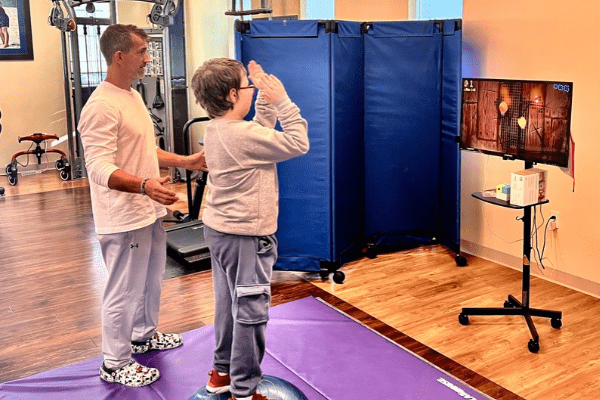
Movement-based games help children practice skills for everyday activities alongside traditional therapy.
For one 9-year-old boy, progress in physical therapy meant more than a higher game score. It meant hopping through hopscotch, jumping rope and playing more confidently with his brother.
At Studer Family Children’s Hospital at Ascension Sacred Heart in Pensacola, pediatric rehabilitation therapists are incorporating movement-based gaming into physical therapy. Therapists adapt interactive activities to help children practice balance, coordination, strength and endurance.
The boy, who has gross motor delays, initially struggled with jumping, hopping on one foot and keeping his balance during active play. Quick changes in direction and coordinated footwork made it difficult to keep up with his brother. When tasks became challenging, he sometimes grew frustrated and withdrew.
Introducing interactive games alongside traditional treatment gave him another reason to move, practice and try again.
Turning movement into play
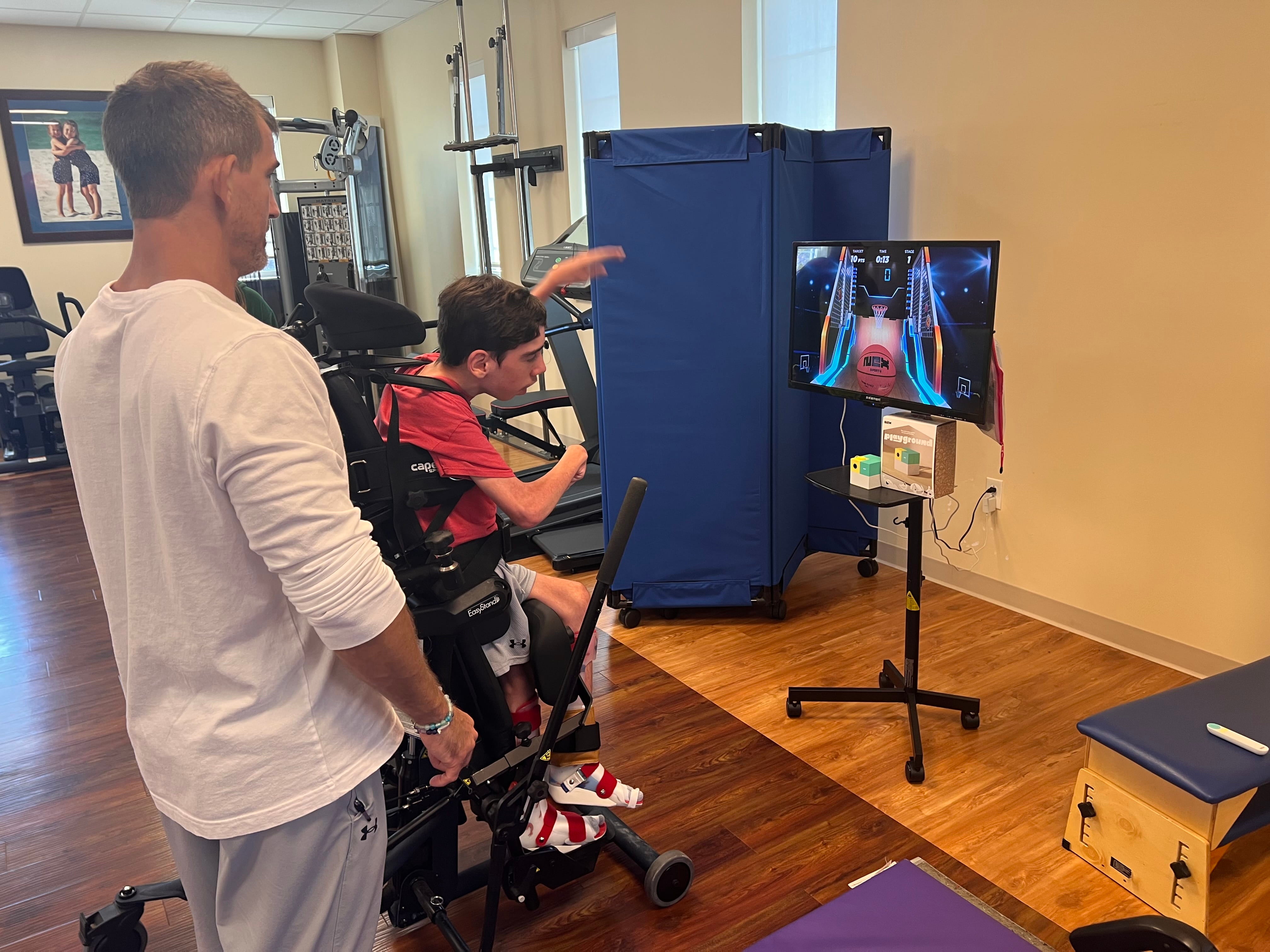
The rehabilitation team uses motion-tracking technology, including Nex Playground, to turn children’s movements into actions within a game. Therapists choose activities based on each child’s abilities and treatment goals.
Reaching may become an opportunity to practice balance. Stepping in different directions can help children work on coordination. Squatting and repeated movements provide opportunities to practice strength and endurance.
“We select interactive games based on each child’s specific movement goals, whether that’s improving balance, reaching or motor planning,” said Ryan Rietz, Lead Therapist at Ascension Sacred Heart Pediatric Rehab. “Turning repetitive movement into play keeps kids engaged so they can build the strength and skills needed for daily activities at home and on the playground.”
Motor planning means figuring out how to organize and carry out a movement. Games give children visual cues and immediate feedback as they practice those skills with their therapist’s guidance.
Building skills for everyday activities
For the 9-year-old, trying to beat his previous scores encouraged repeated practice as activities became more challenging. Traditional physical therapy continued to build the strength and movement control needed for running, jumping and landing safely.
Over the course of treatment, his therapy team reported gains in both movement skills and confidence. He began running faster, galloping and jumping higher and farther. He also carried those skills into hopscotch, sideways jumps and single-leg hops.
One meaningful accomplishment was completing several consecutive jump-rope cycles, bringing together balance, rhythm, timing and coordination.
Those gains helped him participate more confidently in playground activities and enjoy active games with his brother.
Adapting physical therapy to each child
Movement-based games can be adapted for children with different mobility levels, including children who participate from seated positions or use wheelchairs.
Therapists may incorporate these activities into treatment for children with developmental delays, neurological conditions, muscle weakness or difficulties with balance and coordination. The activities and level of difficulty depend on each child’s needs.
Gaming is one tool within an individualized physical therapy plan. The purpose extends beyond the screen: helping children practice meaningful movements and participate in the activities that matter to them.
Next steps and helpful resources
Last updated: November 23, 2026