Central Texas father saved by quick stroke care
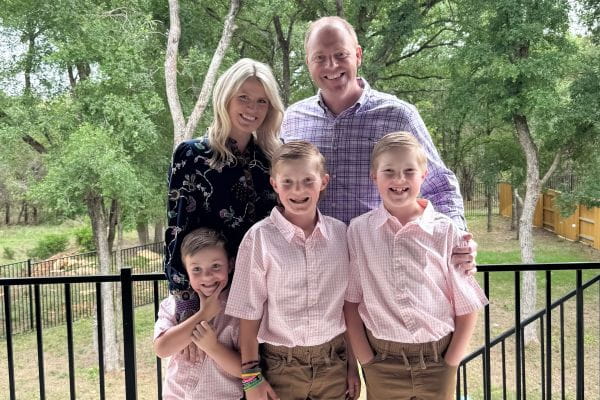
When a father of three showed signs of stroke, Ascension Seton Hays in Kyle, Texas, rapid emergency care helped save his life and led to answers about an underlying heart condition.
On an ordinary morning in Kyle, Texas, Matthew Hokenson’s day began like any other.
The 41-year-old husband and father of three woke up early, had his coffee around 5:30 a.m. and moved through his usual routine of getting his family ready for the day. But on April 15, 2025, everything changed.
Matthew noticed what felt like a migraine coming on — something he had experienced before. At first, it didn’t seem alarming. Nothing about the morning suggested he was facing a medical emergency.
But on the way to school with his children, he realized something wasn’t right. Once home, he tried to rest, hoping the symptoms would pass, but instead, they worsened. As he watched the news, he couldn’t follow what was being said. The words on the screen no longer made sense, and he struggled to form sentences.
That’s when Matthew knew he needed help.
His wife, Jenna, had stepped out to pick up medicine, believing he was dealing with a migraine. But when he called her and told her something was seriously wrong, she immediately knew this was different.
“I knew from his voice that something wasn’t right,” Jenna said. “He told me he couldn’t read a text message, even though he was trying so hard to understand it. That’s when I knew we had a real problem.”
By the time Jenna got home, Matthew was trying to continue with his day — even preparing to go to work. But his condition was rapidly declining. Recognizing the urgency, Jenna helped him into the car and drove him to Ascension Seton Hays in Kyle, Texas.
As soon as they arrived at the emergency department, the care team recognized the seriousness of the situation.
Matthew told the front desk staff that something was wrong, and within moments he was taken back for evaluation. The emergency team quickly identified that he was having a stroke and moved swiftly to begin treatment. Ascension Seton Hays is a Primary Stroke Center, providing 24/7 emergency stroke care.
“They immediately knew something was wrong,” Matthew said. “From the moment we walked in, they moved so quickly. Time is everything in a stroke, and every minute counts.”
For Jenna, the speed and coordination of the team made all the difference.
“Everything happened so fast,” she said. “They were asking questions, assessing him, getting him to scans and making decisions right away. Looking back, that response time saved his life.”
The care team administered TNK, a clot-busting medication used in certain stroke cases, and Matthew began to improve. He was later admitted to the ICU, where his care continued with close monitoring and support from physicians, nurses and staff.
“One of the things that stood out in this case is how quickly our team was able to recognize a stroke in a young patient, which isn’t always obvious,” said Matthew’s neurologist, John Jefferson, MD. “Having immediate access to advanced imaging and in-person neurology allowed us to confirm the diagnosis and begin treatment without delay. That speed truly makes the difference in outcomes.”
As Matthew stabilized, his care team focused on an equally important question: Why did this happen?
For someone young, active and otherwise healthy, finding the cause of a stroke is critical to preventing future events. Through further testing, Matthew’s care team identified the underlying cause — apical hypertrophic cardiomyopathy, a genetic heart condition.
He later had a defibrillator implanted and now continues ongoing care with his cardiology team to help manage his condition and reduce future risk.
“What was so amazing was that they didn’t stop at treating the stroke,” Matthew said. “They kept asking why it happened. That led to finding a heart condition, and that changed everything.”
Although Matthew did not experience lasting physical affects, recovery still required time and effort. He completed therapy and cognitive testing after the stroke to support a full recovery.
For Jenna, one of the most meaningful aspects of their experience was the compassion and support they received throughout Matthew’s care.
“We had just moved to the area, and this was one of the scariest moments of our lives,” she said. “But every single person we encountered was extraordinary. The level of care was just incredible.”
That compassion extended beyond clinical care.
“In moments like this, it’s not just about treating the medical condition — it’s about caring for the whole person and their family,” said physician assistant Holly Davison. “I remember praying with his wife during a very overwhelming time, and that human connection is just as important as the clinical care we provide.”
Today, Matthew is back at work as the general manager of a local car dealership and is grateful to be with his family and moving forward with life. His experience not only changed his perspective, but also reinforced the importance of listening to your body and seeking care quickly.
His message to others is simple: “Don’t ignore warning signs.”
“Don’t be stubborn,” Matthew said. “Trust your body, trust your doctors and go get help. With the medicine and care that’s available now, it’s amazing what recovery can look like.”
For the Hokenson family, what began as a frightening and uncertain morning became a story of fast action, compassionate care and hope. And for Matthew, it’s a reminder that every second matters.
Ascension Seton is committed to advancing stroke care, improving outcomes and serving as a trusted provider across Central Texas. Learn more about care at the Seton Brain and Spine Institute.
If you or a loved one is experiencing warning signs of a stroke such as numbness, confusion, trouble speaking, dizziness or loss of balance, every second counts. It's important to call 911 and go to the nearest emergency room right away.
Last updated: May 12, 2026