Inpatient pediatric care options at Via Christi

Learn more about the most used pediatric inpatient care services at Via Christi St. Francis in Wichita, Kansas.
When a child has a health issue, nothing is more important to the parents than the child getting better. Fortunately, at Via Christi St. Francis in Wichita, Kansas, families will find a full range of children’s care ready to help when a concern arises.
Two of our most used pediatric services include: Inpatient Pediatrics floor, for when a child needs more care than can be provided at home or in a primary care clinic, and Pediatric Intensive Care Unit (PICU), for a child who may be facing a critical illness.
Understanding the options for your child’s care and when to use them is important. We asked Childlife Champion in the inpatient pediatrics units, Cristi Hailey, and Kristina Acevedo, MD, Pediatric Intensivist and Medical Director of the PICU, to share more about these pediatric services.
Childlife services at Via Christi St. Francis
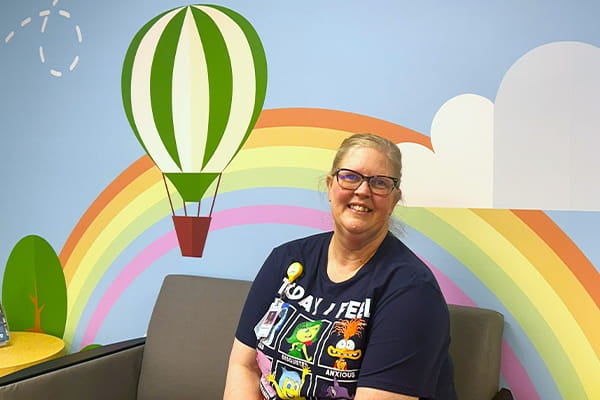
As a Childlife Champion in the inpatient pediatrics units, Cristi Hailey works to create calm for children and their families facing the prospect of a health diagnosis or treatment. The pediatrics department is located on the fifth floor of St. Francis, and the PICU is on the third floor.
“This is my favorite job I’ve ever had,” said Cristi. “And the reason why is I get to help families going through a crisis. A child coming to the pediatrics department has usually been referred to us by another provider. I can't make that go away, but I can make it a little bit better.”
Some common reasons patients come to the pediatrics department include: burn injuries, respiratory illness, constipation or bathroom issues, a need for pediatric suction, outpatient scans such as an MRI, lumbar punctures and more.
Whatever a child is there for, it’s easy for both them and their parents to be overwhelmed by the situation.
“You’re dealing with the whole family. I start by seeing where the parents are,” said Cristi. “If they’re anxious or worried, the kids are going to sense that. Then, I can start working with the kids.”
One of Cristi’s goals is to reduce the child’s discomfort by connecting with them at their level. She talks with them about the things they like, makes jokes, uses puppets, and even brings in toys they may have never seen before. All the while, she watches closely to determine what may be causing them concern.
She also interacts closely with the parents, maintaining communication with electroencephalogram specialists, burn team members, pediatric hospitalists, and physical and occupational therapists who help actively manage the child’s care during their stay.
“If a child comes to us for an inpatient stay, they may be away from home for three or more days,” explained Cristi. “Playing is a huge part of comfort and healing for a kid. Creating fun memories can make the experience better for them.”
It’s a big reason the pediatrics department puts so much energy into celebrating holidays and birthdays. They also partner with Dec My Room, a charitable program dedicated to personalizing a child’s hospital room with decor that reflects the patient’s hobbies and interests. Thanks to the cooperation of organizations in the community, they’re able to arrange visits from a host of special guests.
“We’ve had cartoon characters Bluey and Bingo come through; Paw Patrol Live; Wichita Wind Surge baseball players; Wichita State Shockers; local firefighters have come in, too,” she said.
And, of course, families also can rely on the support of Children’s Miracle Network, which offers patients financial assistance for medical needs not covered by insurance.
Managing a family’s concerns in the moment of a diagnosis is not Cristi’s only responsibility. She also works to prepare them for life after returning home from their stay.
“One example is a kiddo who can’t or won’t swallow pills,” said Cristi. “We have a kit we use to gradually teach them how to swallow a pill, one step at a time. You work your way up from the very small to larger pills. It even uses a sticker chart to give them visual reinforcement, and temporary tattoos they can wear with pride.”
It’s a lot of hard work trying to make things feel easier for parents and families. But it’s all worth it to Cristi.
“I have the opportunity to show care and kindness to people who are going through some of the worst times in their life. And that makes it something that I really want to do, because of the chance to meet somebody at their lowest and help them out at least a little.”
Advanced care in the Pediatric Intensive Care Unit
When a situation is even more distressing, a child may be cared for in the PICU. The PICU is located on the third floor at St. Francis, and is where the most ill and critical pediatric patients are treated.
According to Dr. Kristina Acevedo, many of their patients come to them through the ER.
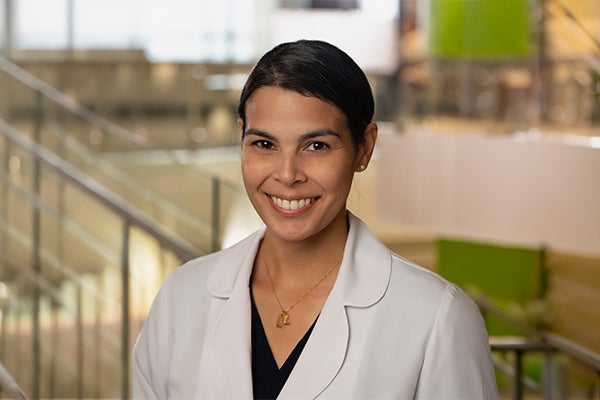
“A typical scenario is that the child arrives in the emergency department, where the attending physician recognizes that they're critically ill and need ICU support,” said Dr. Acevedo. “At that point, they are referred to our team. Respiratory failure is one of the most common reasons for admission, often due to conditions like severe asthma or pneumonia. We also care for children with newly diagnosed diabetes, toxic ingestions and many other critical illnesses.”
Dr. Acevedo and Muthukumar “Kumar” Vellaichamy, MD, are Wichita-based pediatric intensivists from Children’s Mercy in Kansas City, Missouri. Together with the PICU staff, they provide integrated, specialized care to patients in the PICU.
Occasionally, the PICU will receive a patient who was already being cared for by a hospitalist on the pediatric floor, but their illness progressed to where they require intensive care.
“Many of the diagnoses we treat in the ICU are also managed by hospitalists on the pediatric floor,” explained Dr. Acevedo. “The difference lies in the severity of illness and whether the child requires ICU-level support.”
The average length of stay for a patient depends on the severity of the patient’s condition. Regardless of the circumstances, the PICU team values their ability to make a difference for the families they see.
“I feel like our physicians build good relationships and a good rapport with families,” said Dr. Acevedo. “We try our best to provide comfort and answer all their questions. We want to help them to understand exactly what's happening in what is a very stressful time period.
Since coming to Via Christi St. Francis, Dr. Acevedo has come to appreciate her experience in the PICU.
“I believe that your child is in very good hands here, with the physicians, nurses, and entire care team dedicated to providing the best overall environment for their care,” said Dr. Acevedo. “I truly value our team and the opportunity to collaborate with nurses and other physicians such as the hospitalist team, the burn team, the burn surgeons, and the anesthesiologists with whom we work as well.”
If additional resources are needed that are not available in Wichita, Dr. Acevedo and Dr. Vellaichamy can lean into their affiliation with Children’s Mercy.
“If a child's condition requires subspecialty care or additional expertise, we have the resources and partnerships in place to ensure they receive the support they need,” said Dr. Acevedo.
Regardless of the situation, she’s willing to do whatever it takes for those in her care.
“My passion for critical care comes from the opportunity to support families while caring for some of the sickest patients,” said Dr. Acevedo. “There is real joy in seeing those patients recover and knowing that you played a role in their healing.”
To learn more about children’s care at Ascension Via Christi, visit ascension.org/ViaChristiKids.
This blog is intended for general informational use. Any health-related information shared is not meant to provide or replace professional medical advice and does not establish a patient-provider relationship. If you are experiencing a medical emergency, call 911 or go to the nearest emergency room.
Last updated: April 10, 2026