Preparing safely for the Austin Marathon
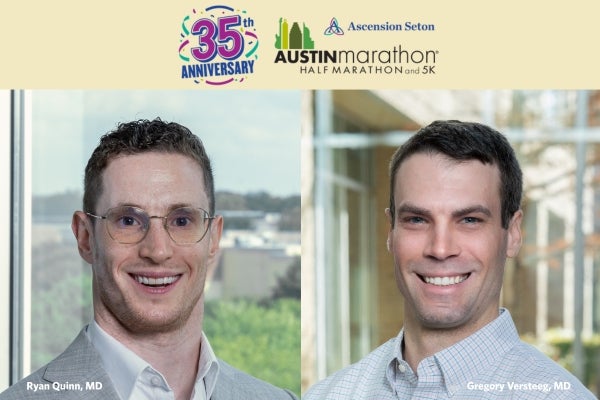
Ascension Seton cardiologist Ryan Quinn, MD, and orthopedic surgeon Gregory Versteeg, MD, share tips to help Central Texans prepare safely for race day.
Training for a marathon is a powerful personal achievement, and with the right preparation, it can be done safely. As thousands of runners gear up for the upcoming Austin Marathon on February 15, 2026, Ascension Seton doctors share their tips to help athletes protect their hearts, joints and overall health on race day.
Preparation matters
“Running is an extremely safe sport,” said Ryan Quinn, MD, sports cardiologist with Ascension Seton. “Serious cardiac events during races are very rare — fewer than one in 100,000 runners experience a cardiac arrest.”
That said, Dr. Quinn explains that risk increases for runners who are middle-aged, new to high endurance events, or have untreated conditions like high blood pressure or high cholesterol. Proper training, gradual mileage increases and listening to your body can make a difference.
“Your body isn’t designed to suddenly run 26.2 miles without preparation,” Dr. Quinn said. “Training over several months allows your heart and muscles to adapt safely.”
Warning signs
While serious medical emergencies are uncommon, runners should be aware of symptoms that require immediate attention:
- A sudden, unexplained drop in performance
- Chest pain, pressure or discomfort
- Dizziness or lightheadedness
- Unusual shortness of breath compared to your normal effort
“If something feels off, especially near the finish line, it’s important to slow down and seek help,” Dr. Quinn said. “That’s also where medical teams are most concentrated to respond quickly.”
Training for injury prevention
From an orthopedic standpoint, preparation starts long before race day. Gregory Versteeg, MD, orthopedic surgeon at Ascension Seton, wants you to know that marathon training should be gradual and well-rounded, not rushed.
“Overuse injuries often happen when runners increase mileage too quickly or don’t give their bodies time to adapt,” Dr. Versteeg said. “Stress fractures, shin pain and knee injuries are some of the most common problems we see.”
Building mileage slowly over several months helps bones, muscles and tendons strengthen safely. Dr. Versteeg also stresses the importance of strength training, especially for the hips, glutes, legs and core. Strong supporting muscles help stabilize joints and reduce the repetitive stress that can lead to injury.
“Running is repetitive by nature,” he explained. “If you don’t have good strength and balance, that stress adds up quickly.”
Footwear is another important part of injury prevention. Dr. Versteeg advises runners to avoid racing in brand-new shoes, while also avoiding overly worn shoes.
“You don’t want to run 26.2 miles in shoes straight out of the box,” he said. “They should be broken in, but still have enough cushioning and support. The right balance helps prevent blisters, pain and overuse injuries.”
Hydration, fueling and pacing
Hydration before, during and after the race is essential. Replacing fluids helps regulate body temperature and supports heart and muscle function throughout the race.
Electrolytes play an important role by replacing sodium lost through sweat, while carbohydrates provide the fuel your body needs to sustain long-distance running. Many runners benefit from planned fueling during the race rather than waiting until they feel fatigued.
When it comes to pacing, Dr. Quinn encourages runners not to rely solely on smartwatch heart-rate zones, which can vary widely from device to device. Instead, he recommends the simple and reliable “talk test.”
“If you can speak in full sentences but still feel slightly challenged, you’re likely in a healthy training zone,” Dr. Quinn explained. “If you’re gasping for air and unable to complete a sentence, you won’t be able to sustain that pace for the whole race. And if you could sing without effort, you may not be challenging yourself enough.”
Don’t skip the cool down
Crossing the finish line is an emotional and proud moment, but stopping immediately after the race can sometimes do more harm than good. Dr. Quinn recommends continuing to walk, hydrate and gently stretch after finishing.
“When you stop suddenly, blood can pool in your legs, especially if you’re dehydrated,” Dr. Quinn said. “That can lead to dizziness or fainting. Think of your heart like an engine, you warm it up before the race, and you need to cool it down afterward.”
When to talk to a doctor
Runners with heart disease risk factors, such as high blood pressure, high cholesterol or a family history of heart disease, should talk with a doctor before race day. The same is true for runners experiencing persistent joint pain, pain that affects walking or a noticeable decline in performance.
“Pain that forces you to change how you run or makes it hard to walk is not something to ignore,” Dr. Versteeg said. “Early evaluation can prevent a small problem from becoming a serious injury.”
Ascension Seton is sponsoring the Austin Marathon, and our care teams will be on site on race day with medical teams ready to provide care if needed. Beyond race day, Ascension Seton is available year-round to support runners at every stage of training and recovery. Schedule an appointment with Dr. Quinn and Dr. Versteeg today.
Last updated: February 4, 2026