Former smoker is grateful robotic surgery removed lung cancer
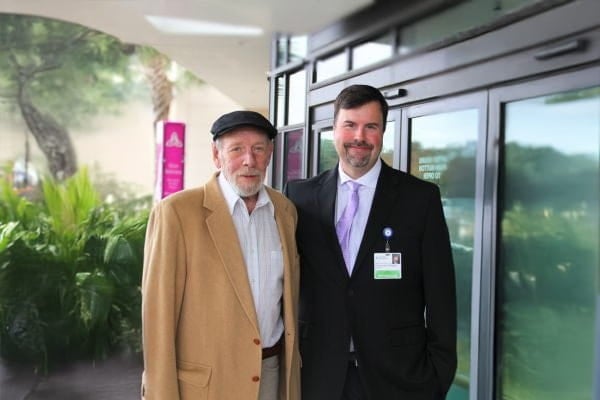
Ascension Sacred Heart Cancer Center uses robotic systems to successfully remove tumors from patients diagnosed with lung cancer.
When 74-year-old Mr. Searcy, a former smoker, was enrolled in Ascension Sacred Heart’s Lung Cancer Screening Program, he didn’t realize he was beginning a journey that would ultimately save his life. Unlike many patients who are referred to the hospital after an abnormal scan elsewhere, Mr. Searcy received all of his lung care at our cancer center. From his CT to PET screenings and diagnosis to biopsy and treatment, his care was coordinated seamlessly through the Sacred Heart Cancer Center team.
His primary care physician referred him to the program to receive regular CT scans for early detection. During one of those scans, a small nodule was discovered on his lung. Although it appeared slow-growing, a follow-up PET scan revealed activity that suggested cancer.
When the Lung Navigation team reviewed his scans with Dr. Christopher Ellington, a thoracic surgeon at Ascension Sacred Heart Cancer Center, they reached out to Mr. Searcy to discuss their recommendations. After meeting with Dr. Ellington and the care team, Mr. Searcy decided to move forward with the robotic option for a minimally invasive procedure.
To biopsy and remove the mass in a single procedure, Dr. Ellington utilized two of the most advanced robotic surgical systems available today: the Ion Robotic Bronchoscopy System and the da Vinci 5 (DV5). This innovative dual-robot approach allowed both steps to be completed under one anesthetic session, rather than the separate procedures typically required for biopsy and removal. The result is a level of precision and efficiency that only Ascension Sacred Heart currently offers in the region.
The Ion system provides 10x magnification and real-time, 3D image guidance, allowing surgeons to navigate even the smallest, hardest-to-reach areas of the lung. Once the tumor was located, Dr. Ellington used the new da Vinci 5 robotic surgical system. Together, these technologies deliver surgical precision, smaller incisions, and potentially faster recovery times for patients.
When Mr. Searcy woke up from surgery, he was amazed to feel no pain, and only mild numbness on one side of his chest afterward.
“I expected a big incision or a long recovery,” he recalled. “But I never even needed strong pain medicine. It was amazing.”
The nodule was confirmed to be cancerous, but thanks to the advanced robotic procedure, Dr. Ellington successfully removed the infected tissue. Soon after, he told Mr. Searcy the words every patient hopes to hear: he was cancer-free.
“Being able to tell a patient they are cancer-free is truly one of the most rewarding aspects of my job,” said Dr. Ellington. “Being able to use this technology to provide the best possible care for our patients is an honor.”
Now back to enjoying his favorite activities, like gardening, Mr. Searcy feels deeply grateful for the team that guided him from start to finish.
“Dr. Ellington told me I had cancer—not that I have it,” he said with a smile. “That moment meant everything to me.”
November is Lung Cancer Awareness Month. If you or a loved one has been diagnosed with lung cancer, or you’re concerned about your risk, you don’t have to travel far for advanced, compassionate care. The doctors and multispecialty care teams at Ascension Sacred Heart Cancer Center provide personalized treatment and support services in a healing environment.
Learn more about our minimally invasive robotic lung procedures or schedule an appointment with Dr. Ellington.
Last updated: noviembre 13, 2025