How dry needling therapy helps muscle pain
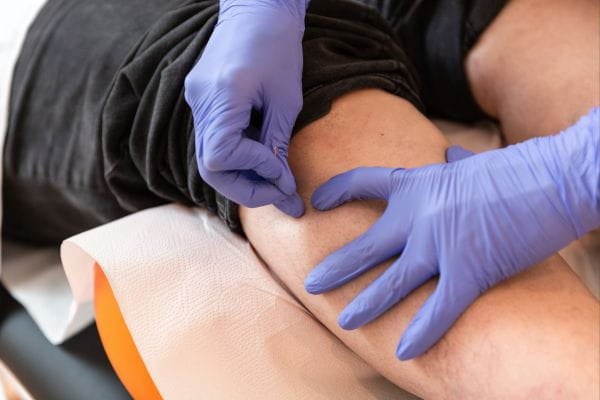
Physical therapists at Ascension St. Vincent across Indiana use dry needling to help with muscle injuries by easing pain and helping you move better.
Have you been experiencing muscle pain or stiffness that persists? Despite your efforts to manage it, the pain won’t go away. Physical therapy is an option to help you find relief from constant pain. At Ascension St. Vincent, our physical therapists use different techniques to help with muscle tension and mobility. One of those techniques is dry needling, a popular physical therapy technique that targets and releases the tension in your muscles.
How dry needling works
Using a thin needle, a physical therapist targets a specific muscle to cause a twitch, which helps release tension.
Lewis Langley, PT, DPT, and OCS, from Ascension St. Vincent Sports Performance, practices this therapy and says there are some key ways dry needling helps the body heal:
- It changes the chemistry inside your muscles, helping them return to a healthier state.
- It makes stiff muscles more flexible, improving your range of motion.
- It reduces pain sensitivity, so you feel less discomfort.
- It resets a muscle's tension, much like stretching out an old, stiff rubber band.
Dry needling is a personalized treatment used to treat a wide range of muscle-related issues, like muscle and joint injuries, tendonitis and chronic pain and sports injuries. Your physical therapist will evaluate your pain and work with you to create the right dry needling treatment for you.
Langley explained, "Any treatment we do as PTs, we take a look at the whole person, and any approach we take should be personalized. There are many approaches to consider, but this is one of the most patient-specific approaches."
Is dry needling right for you?
While dry needling is generally safe for most, but if you have the following conditions it is not recommended if you have:
- An active infection or open wound
- A compromised immune system or diabetes
- A history of lung collapse (if the treatment area is near your lungs)
- If you're on high doses of blood thinners
- Pregnancy or the possibility of pregnancy
It's also not recommended if you have a strong fear of needles.
What to expect during dry needling
Your physical therapist may use a "pistoning technique" to quickly insert and remove the needle or a "quiet needling" approach where the needles are left in place for a short time.
Most people feel the greatest improvement within one to four visits. Your therapist will often use a "test-retest" method that will assess your movement and pain before the session, perform the dry needling, and then reassess the same movement afterward to see if there has been an immediate change. This helps them confirm if the treatment is working for you and allows your therapist to look for positive changes in your pain, flexibility, and overall function right away.
The most common side effect after treatment is muscle soreness in the treated area, similar to how you feel after a good workout. This usually goes away within 24 to 48 hours. Other minor side effects may include some lightheadedness, redness, or a slight bruise.
We encourage you to discuss a referral for physical therapy with your primary care physician
Last updated: January 5, 2026